
英中双语原创(78) 拙政园各景点串讲(中英文)
英中双语原创(78) 拙政园各景点串讲(中英文)
A guide to the general touring route in Humble Administrator’s Garden
很遗憾,身为苏州人,这么大岁数刚懂拙政园; 很高兴,这么大岁数终于懂拙政园了。
【前言】
很多带着孩子跟随笔者去游览拙政园的家长都会在游览结束后忧心忡忡地问道: 老师,我家孩子只顾着玩假山、上蹿下跳,他是不是根本欣赏不来苏州园林的美好?现在统一回复大家,本人当年也一样,真正开始为拙政园之美折服,是2004年初夏的一个傍晚,彼时距离26岁生日已不足半年;而彻底理解拙政园,毫不夸张地说,就是最近半年——因为各种原因,这几个月里连续接待了多个批次海内外朋友,使笔者在反复担任导游讲解过程中不断地去深入学习这个园林的大量细节,同时也完全沉醉于这座苏州规模最庞大的私家园林的深厚历史底蕴和超群园林美学之中。所以,今天笔者就将近期整理的关于拙政园最常规游览路线中英文讲解分享给大家,不尽之处,今后会逐步完善。
Many parents who bring their children to visit the Humble Administrator's Garden with me could ask me the same question in fraught after the visit is done: "My child only cares about playing on the rockery (man-made hills) and jumping around wildly. Is he/she not able to appreciate the beauty of Suzhou’s classic private gardens at all?" Now I’d answer this question frankly. I was the same way back then. The first time when I got truly captivated by the beauty of the Humble Administrator's Garden was an early evening in the early summer of 2004 when I was at the age of going on 26 within months. And I can say without any hyperbole that I haven’t fully understood the Humble Administrator's Garden until the recent six months. For various reasons, I have hosted several groups of friends from domestic and abroad, which has driven me to continuously learn about every single detail of this garden while repeatedly acting as a touring guide for friends and clients. Meanwhile, I’ve been completely intoxicated by the profound historical heritage and superb gardening aesthetics of this largest private garden in Suzhou. I hereby would share with everyone the general touring route with all scenery spots along it bilingually. Anything imperfect, I’ll make it up in the coming future. Thanks for your patience!
【正文】
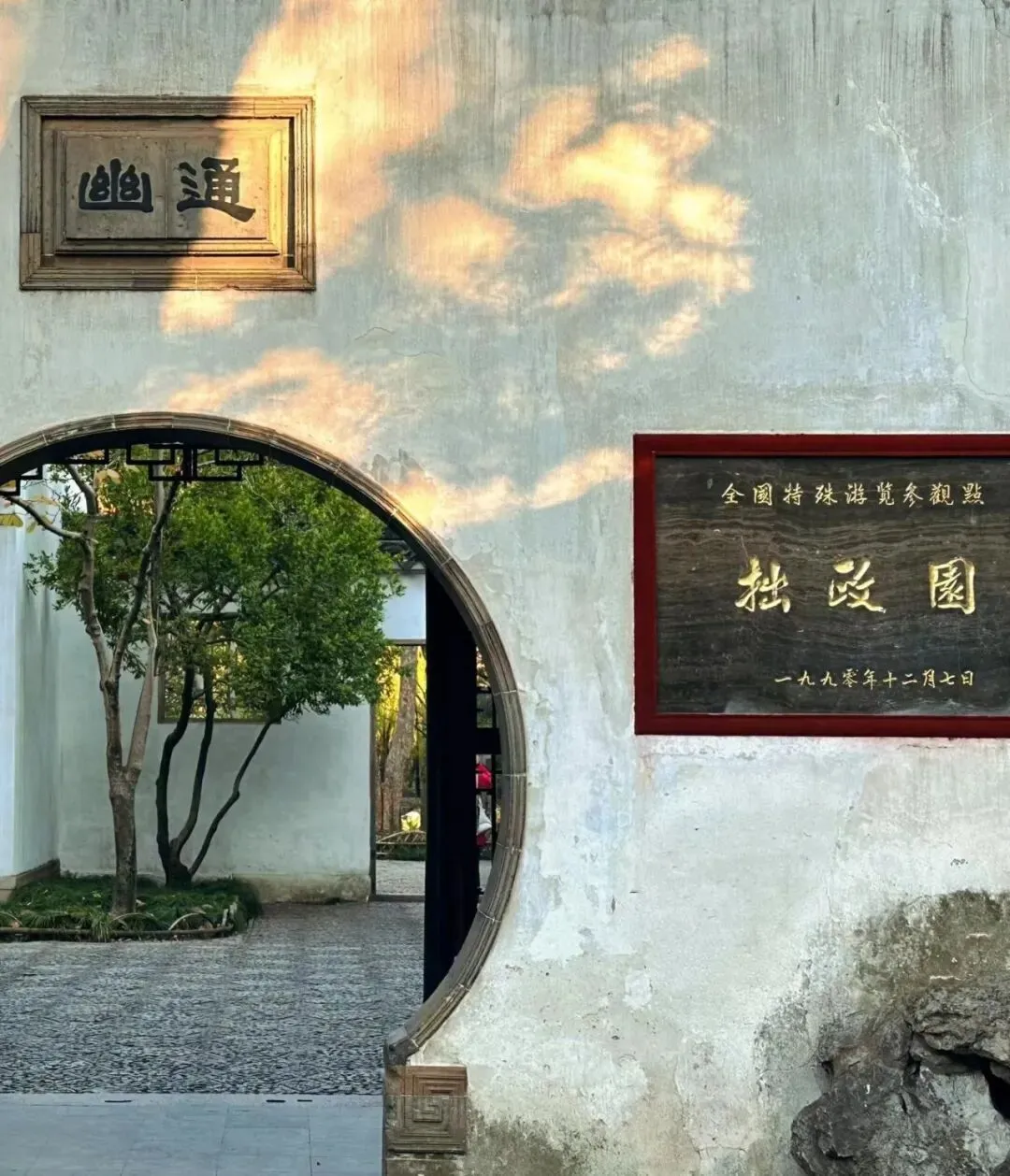
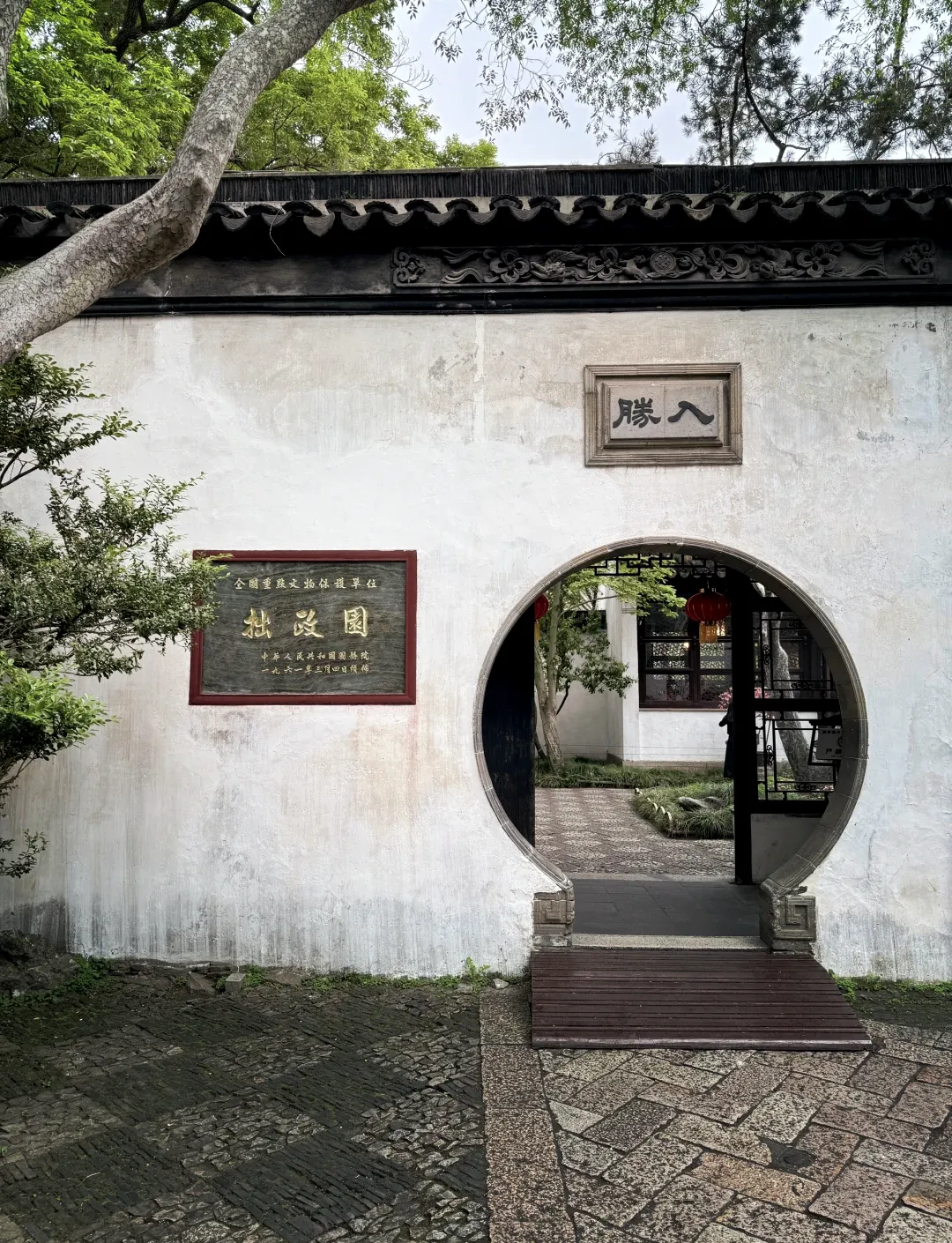
拙政园占地面积78亩(5.2公顷),与北京颐和园、承德避暑山庄、苏州留园一起被誉为中国四大名园。拙政园始建于明正德四年(公元1509),是明弘治进士、明嘉靖年间御史王献臣在此选址,由明朝著名吴门画派宗师文徵明绘制整体蓝图所建。王献臣因为官清廉而不入流,故隐退于此,自认为不适合从政,取西晋高官潘岳《闲居赋》中的“是亦拙者之为政也”,以此自谦明志。
The Humble Administrator's Garden covers an area of 78 mu (52,000 square meters). It is honored as one of the four most famous gardens in China, along with the Summer Palace in Beijing, the Mountain Resort in Chengde, and the Lingering Garden in Suzhou since 1961. Construction of the Humble Administrator's Garden can be traced back to 1509 (the fourth year of the Zhengde reign of the Ming Dynasty). The site was chosen by Wang Xianchen, a Jinshi (the title for a successful candidate in the highest imperial examination of Ancient China) during the Hongzhi reign and an imperial censor during the Jiajing reign, a counterpart of the leader of today’s Central Inspection Team, and the master plan was conducted by Wen Zhengming, a renowned master of the Wu School of painting in the Ming Dynasty. Wang Xianchen was sidelined for long due to his incorruptibility and made a decision of earlier retirement in Suzhou in light of his believing himself unsuitable for imperial politics. He adopted the phrase "This is also the way of a clumsy person to govern" from the "Ode to Idle Living" by Pan Yue, a high-ranking official of the Western Jin Dynasty, to humbly express his aspirations.
东园
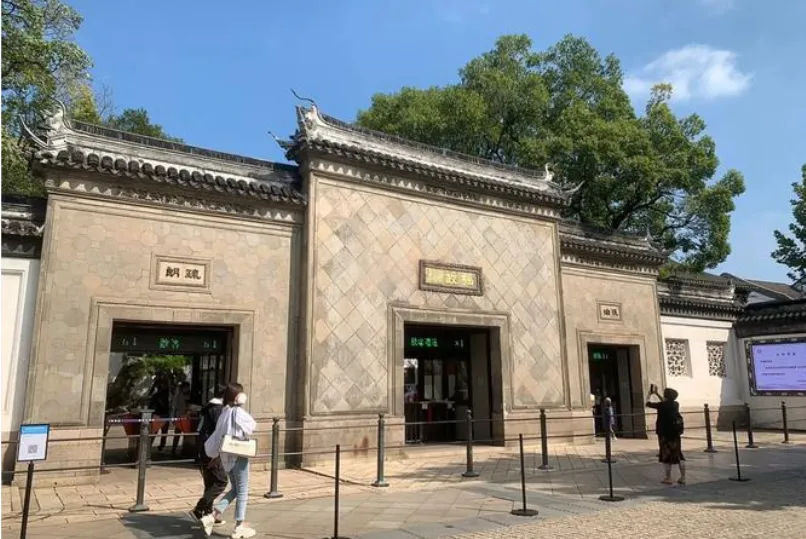
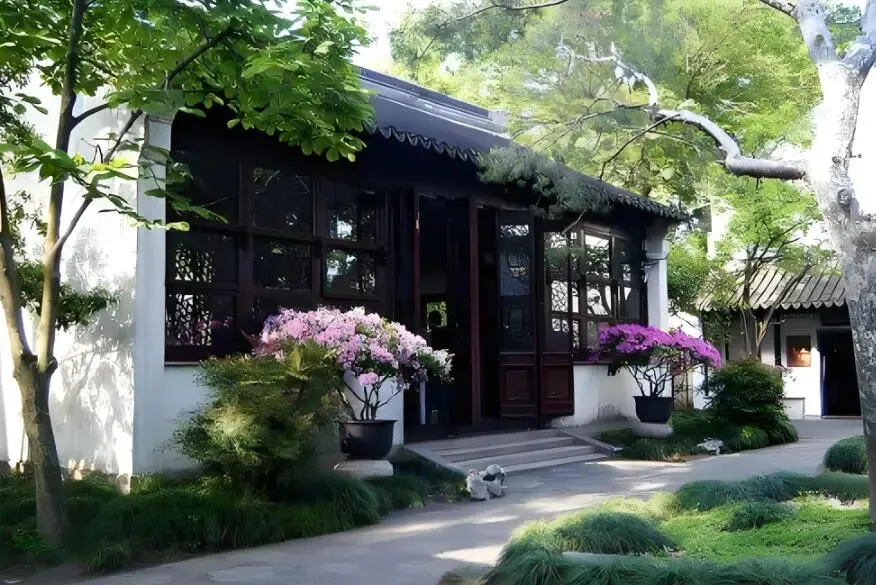
拙政园分东中西三部分,其中西园是晚清名仕张履谦所补充建设,亦称补园。游客最先进入的是东园,首先映入眼帘的是兰雪堂,象征主人品格像冰雪一样高洁,兰雪堂上有冰裂纹窗,部分窗户木杆上有梅花状嵌刻,称冰梅纹,故谓“寒窗”,古人云: 十年寒窗无人问,一朝成名天下知。
The Humble Administrator's Garden is divided into three parts: east, central, and west. The West Part, also known as the Supplementary Garden, was added by a prominent figure Zhang Lüqian in late Qing Dynasty. The East Part is the first one for tourists to step in. The first scenery spot that will be seen is the Lanxue (Orchid and Snow) Hall, symbolizing the owner's noble integrity as the white snow, characterized by its purity and clarity. The hall features windows with ice-crack shaped patterns, and partly plum blossom-shaped carvings on its wooden poles, also known as ice-plum patterns, hence the name "Chilly Windows". The old saying goes, "Ten years of hard study behind the chilly windows stay unnoticed, but one day of success in imperial exams brings fame across the empire."
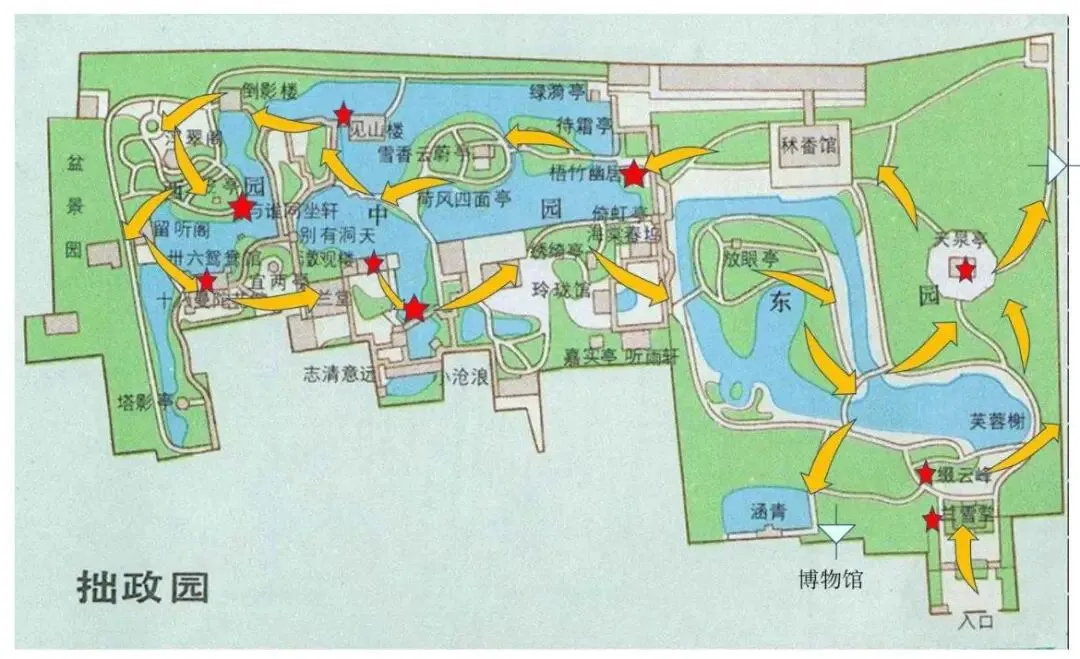
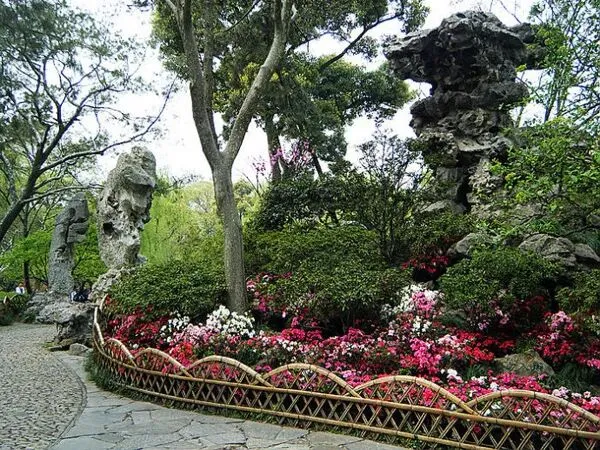
穿过兰雪堂左拐即见缀云峰,苏州三大(太湖石)名峰之一(另两个为留园冠云峰和苏州十中的瑞云峰),用障眼之法阻挡住东园景观,叫抑景或障景,符合风水原理,又彰显神秘之感,太湖石有“瘦、漏、透、皱”之美,缀云峰于1954年按照古时记载修复重建。
Turning left after passing through Lanxue Hall, the Zhuiyun Peak, one of the three famous peaks (of Taihu stone) in Suzhou (the other two being Guanyun Peak in Lingering Garden and Ruiyun Peak in Suzhou No. 10 High School) will be spotted right away. It uses a means of visual illusion to obstruct the view of the East Part, a gardening technique called "suppressing or obstructing viewing the scenery" which complies with feng shui principles and creates a vibe of mystery. Taihu stones are known for their distinctive beauty of being "slim, porous, translucent, and wrinkled". The Zhuiyun Peak you are spotting now is a resumed piece in compliance with its ancient recordings.
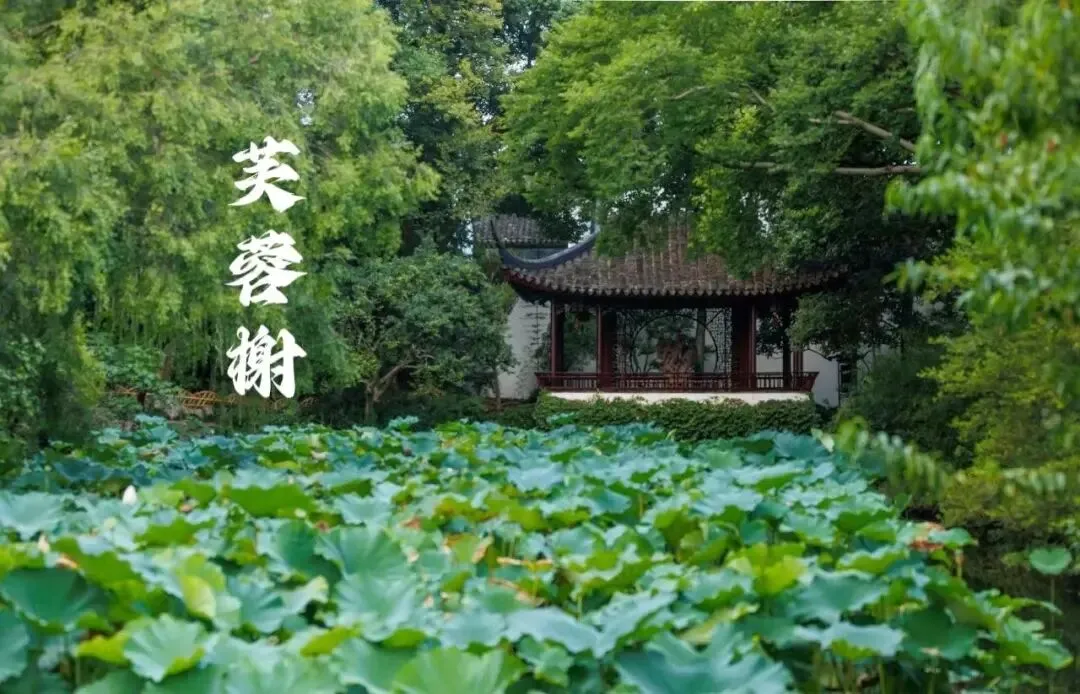
缀云峰东北方向有一座名为芙蓉榭的建筑,榭在中国古建中表示滨水的屋舍,多用于休闲游赏功能。荷花被誉为“出水芙蓉”,芙蓉榭正对着东园的一片宽阔水域,是夏日里观赏荷花的好去处。
To the northeast of Zhuiyun Peak stands a building called Furong Xie. In ancient Chinese architecture, Xie signifies a waterfront chamber, often used for leisure and sightseeing. Lotus flowers were lauded as "Furong emerging from the water" in China. A wide expanse of water in the East Part is just in front of Furong Xie, which makes it a superb place to admire lotus flowers in summer days.
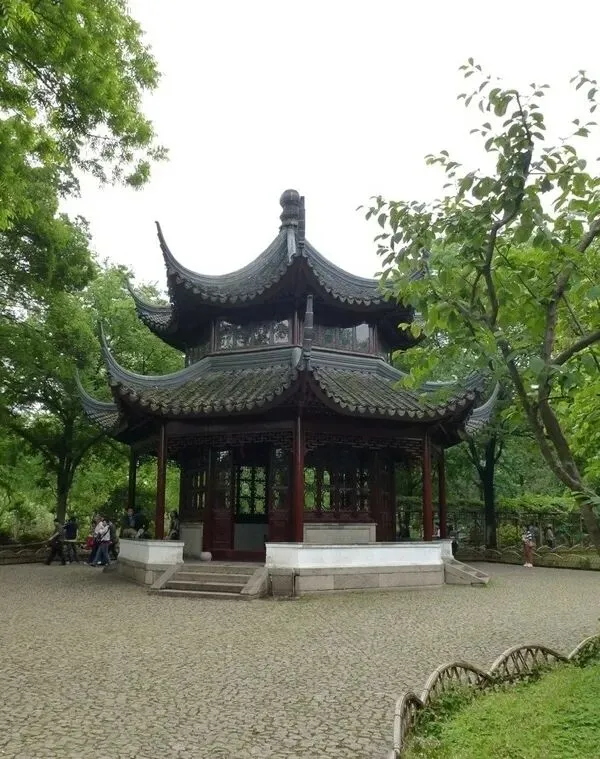
距离芙蓉榭不远处就是天泉亭。拙政园所处位置在元代是一座名为“大弘寺”的寺庙,元末战乱后废弃,寺中有僧侣挖地下水而成的井,园主认为水乃聚财聚气之物,故建天泉亭以拢之。
Tianquan Pavilion (the Lord’s Spring) stands steps away. The site of the Humble Administrator's Garden was originally a temple called "Da Hong" during the Yuan Dynasty and later ditched in warring at the end of the same Dynasty. The temple used to have a well dug by monks to collect groundwater for daily use. Taken over by Wang Xianchen, the new owner who believed that water was a source of wealth and energy, he hence built the Tianquan Pavilion to amass them.
秫香馆,是东园中最大的建筑单体,秫原指高粱,后来被文化人广泛用于指代各种谷物,这里主要指江南地区种植的稻谷,因拙政园地处北园田区,每当周围稻田里稻花盛开时,清香四溢,满堂飘香,因此由明后期园主王心一(购得东园名归田园居)据此命名。
The Shuxiang House is the largest single-standing building in the East Part of the Garden. "Shu" originally refers to sorghum and later widely used by intellectuals to refer to a wide variety of grains including rice (the staple food of the southern bank of Yangtze River). The Humble Administrator's Garden had long been surrounded by rice paddies in northern farming lots of Suzhou. When the rice paddies were in full bloom, the air was fraught with their sweet fragrance, thus came the name by the successor owner Mr. Wang Xinyi who bought the East Part in 1630s as well as renamed the whole eastern part as “countryside residence for the retirees”
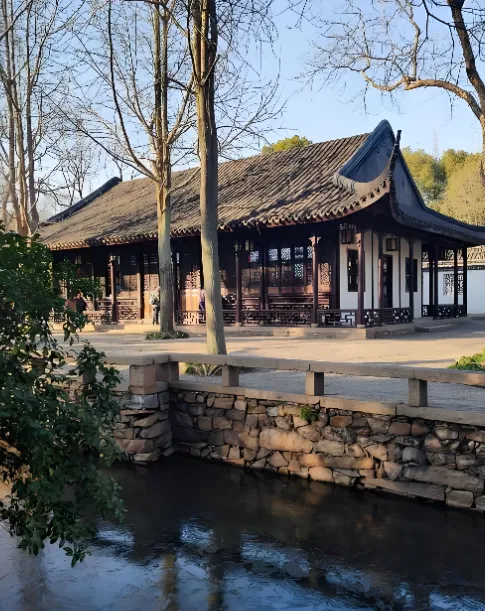
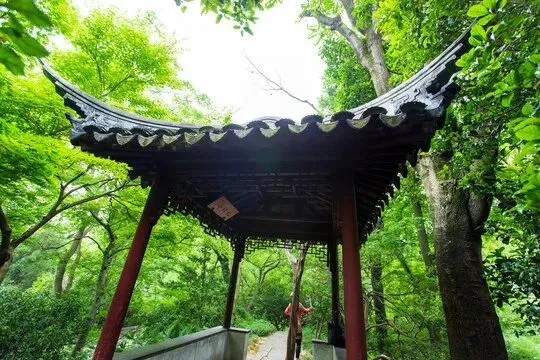
跨越秫香馆南边池塘上的小桥,来到一小岛,岛上参天古树丛中,有一座山亭若隐若现,这就是“放眼亭”,也是西园制高点,与芙蓉榭、天泉亭成为对景。放眼亭借白居易的“放眼望青山”来造就一种“登高使人意远”的意境。高耸的放眼亭居于“山颠”,构造简朴,亭中悬挂“放眼亭”匾額,署名“徵明”二字,却非文徵明亲笔题词,而是后人集文徵明书法中的字拼凑而成。
Crossing the small bridge over the pond to the south of the Shuxiang Pavilion, we’ll arrive at a small island. Amidst the towering trees, a Kiosk looms. This is the Fangyan Kiosk, the highest point in the West Part, forming a scenic contrast with the Furong Xie and Tianquan Pavilion to its south. The name of Fangyan Kiosk borrows from Bai Juyi's line "Looking out at the green mounts," to create an vibe of "climbing higher makes one's thoughts roaming farther." The tall Fangyan Kiosk sits atop the "mount’s peak" and it’s simply structured, bearing the plaque "Fangyan Kiosk," signed "Zhengming." However, this is not an inscription by Wen Zhengming himself, but a compilation of characters picked from his calligraphy by later admirers.
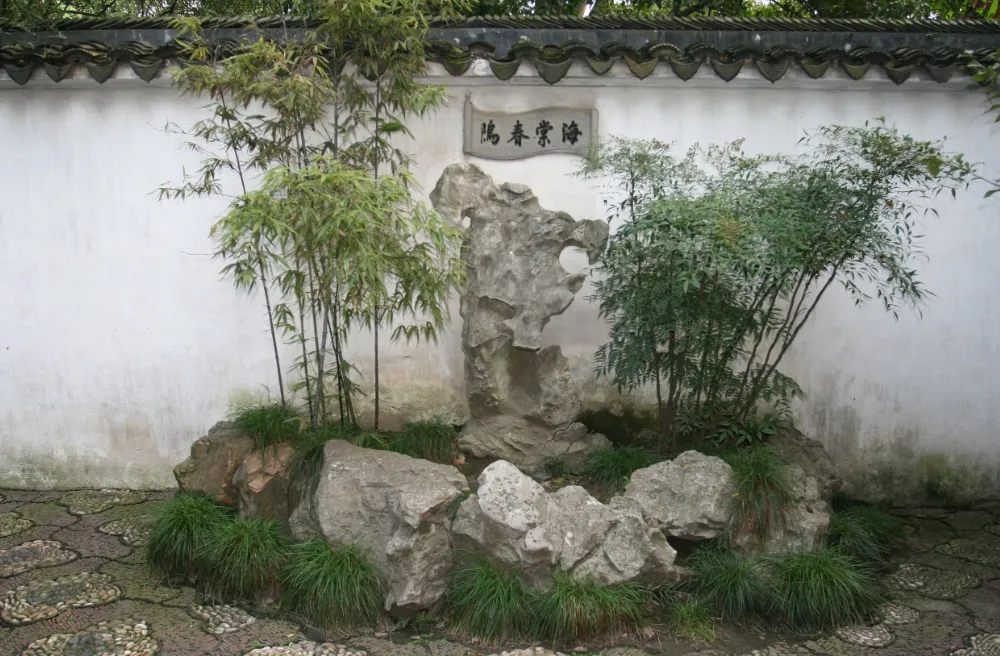
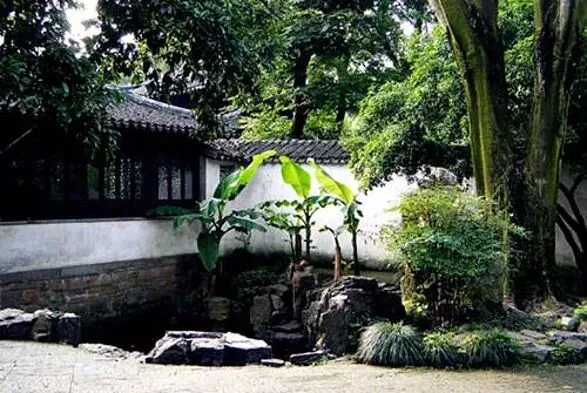
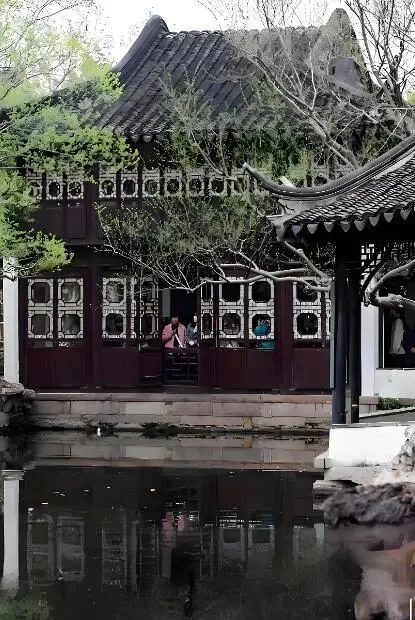
从放眼亭所在的小山拾级而下,走过倚虹亭和倚虹长廊,就来到了海棠春坞,这是个几乎独立的庭院式书房,环境优雅。庭前铺地用的鹅卵石镶嵌着海棠花的形状,故得名。隔壁就是听雨轩,轩前一泓清池,池内植有荷花,四周有芭蕉、翠竹相映,有诗曰“听雨入秋竹”,古代文化人多有欣赏雨打芭蕉之声,或者是雨滴落在各种植物叶面上的声音。伴着落雨之声,正是吟诗作赋或者沉思的时机。
Down the steps from the small hill where Fangyan Kiosk is located, past Yihong Kiosk and Yihong Corridor, you arrive at Haitang Chun Wu, Spring CrabappleYard, an almost independent courtyard-style study with a graceful environment. The pebble stones paving the courtyard are inlaid with the shape of crabapple blossoms, hence the name. Next door is Tingyu Pavilion, a place to listen to the rhythm of the falling rain, in front of which lies a clear pond planted with lotus flowers, surrounded by Chinese Banana Trees and green bamboo. A poem says, "Listening to the rain enters the autumn bamboo groves," reflecting how ancient scholars often appreciated the sound of rain pattering on banana leaves or the sound of raindrops falling on various plant leaves. With the rhythmic sound of falling rain, it would be perfect time for ancient intellectuals to was compose poetry or engaging in contemplation.
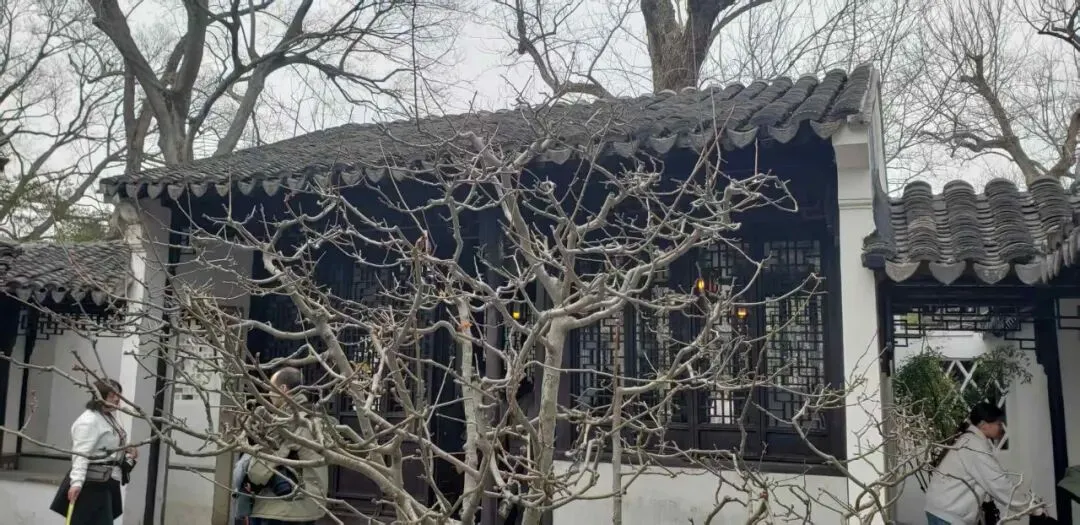
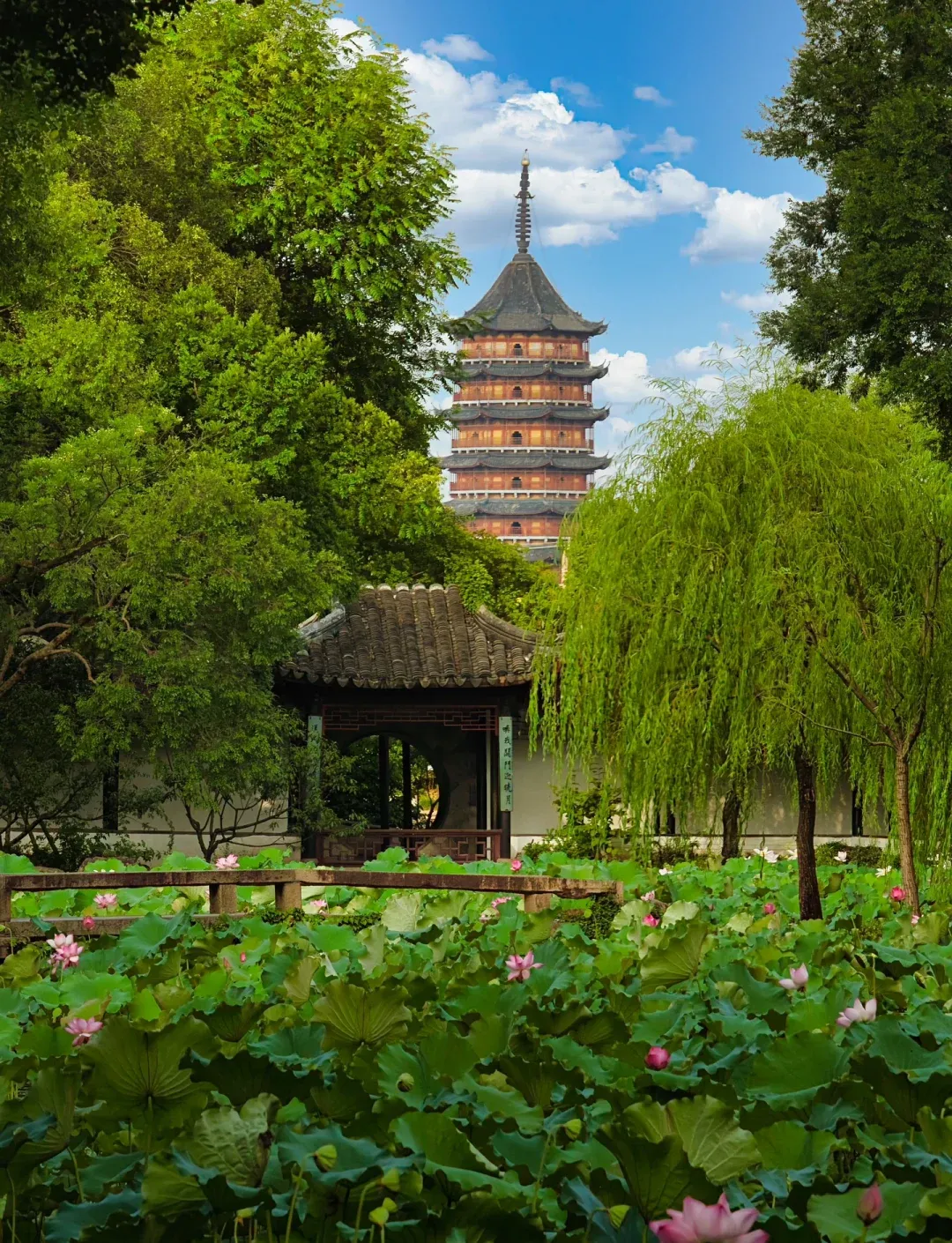
东园与中园之间有长廊相区隔,长廊上每一个花窗的窗格都不同,在里面看到景色亦不同,故有“移步换景”之称。通过花窗可以从东园看到中园的主景,称“漏景”,远处还能看到报恩寺(始于三国时期孙权为报吴国太母恩所建)里的苏州现存第一高塔“报恩寺塔”(又名“北寺塔”,始建于南朝,重建于南宋),该塔虽在距离东园约2里多地的报恩寺内,却可在园内清晰可见,这一造园手法曰“借景”(在沧浪亭的建造中亦考虑了借园外葑溪之水为景的类似手法)。站在这几扇能看到北寺塔的花窗前,可以同时体会到“漏景”和“借景”之美妙。此处亦是游人在拙政园内打卡摄影的最集中地。
The East Part and the Central Part of the Garden are bisected by a long corridor. Each window in the corridor has its own latticework distinctively, tendering different views from through them, thus creating an efficacy of "altering scenery with every single step". Through the latticed windows, one can see the main scenery of the Central Part from the East part, a gardening technique known as "leaked scenery." In the distance, we can also see the Bao'en Temple Pagoda (also known as the North Temple Pagoda, originally built up in the Southern Dynasties and reconstructed in Southern Song Dynasty), the tallest existing ancient pagoda in Suzhou located within the Bao'en Temple that was constructed even earlier at the behest of Sun Quan, King of Wu of the Three Kingdoms Era, to pay his filial piety to his mother who’s pious to Buddhism. A bit less than one mile from the East Part notwithstanding, the Pagoda is clearly visible from within the garden. This sort of garden design technique is called "borrowing scenery", a similar technique used in the construction of the Cang Lang Pavilion (Garden), borrowing the water scenery from the Feng Xi Brook outside the garden. Standing in front of these latticed windows that offer a view of the Bao’en Pagoda, one can simultaneously appreciate the beauty of "leaked scenery" and "borrowed scenery." This led the place to being the most popular spot for tourists to take photos in the Humble Administrator's Garden.
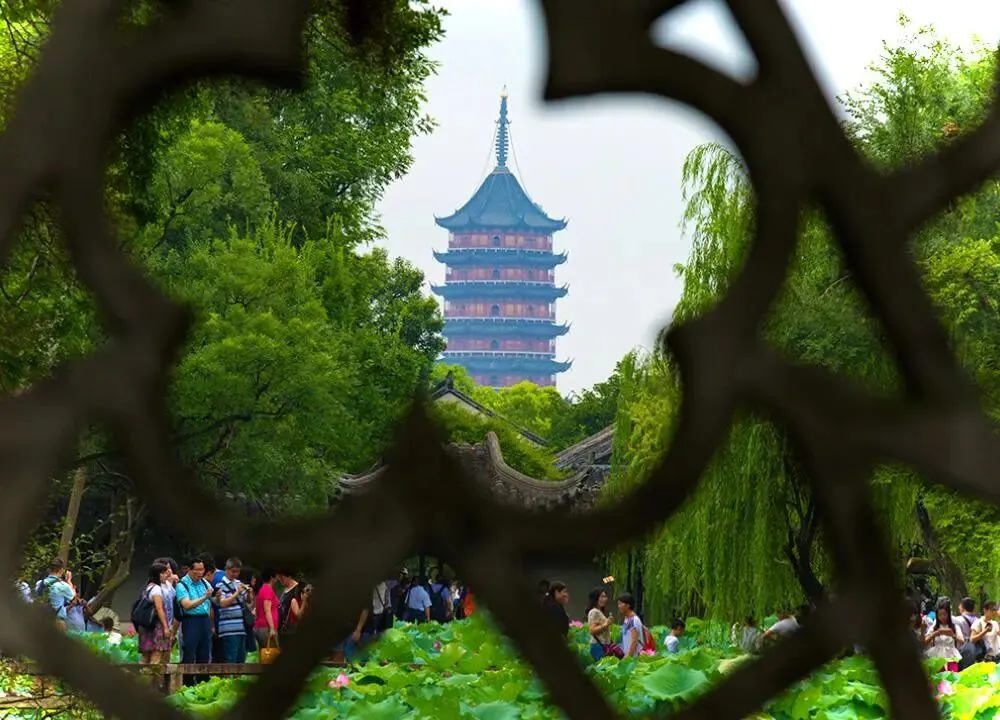
苏州古城在1986年受联合国教科文组织(UNESCO)规定约束,护城河范围内所有建筑物均不能超过北寺塔第三层,所以北寺塔至今仍是苏州古城内高度首屈一指的建筑物,至今在古城内于任意角度登高都能轻松看到北寺塔的雄伟身姿。
1986 became the first year that Suzhou's old city began to be restricted by UNESCO regulations, which stipulates that no building within the moated scope is allowed to overtake the height of the Bao’en Temple Pagoda’s third story. Therefore, the Bao’en Temple Pagoda remains the tallest building in Suzhou's old city, and its imposing figure can still be easily spotted from any angle if one stands atop any building within the scope.
中园
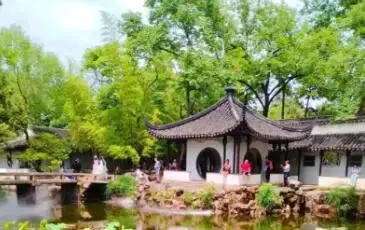
借景打卡地边有个“梧竹幽居亭”,原名“吾足安居”,因吴语发音相似,后更名为更优雅的“梧竹幽居”。从亭的四个方向可以看到竹、荷、松、白墙,分别代表春、夏、秋、冬四景。
Beside the scenic spot for tourists to take photos is the square-shaped "Wuzhu Youju Kiosk," originally named "Wuzu Anju," literally “living here comfortably enough”, but later renamed with the more elegant name "Wuzhu Youju", literally “living in seclusion by bamboo and sycamore trees” on the ground of the similarity in pronunciation in the Wu dialect. From the four directions of the kiosk, you will see bamboo, lotus, pine trees, and white walls, representing the four seasons of spring, summer, autumn, and winter respectively.
从梧竹幽居亭沿长廊往北,是藏在绿树翠波之中的绿漪亭,这常是一个游人容易忽略的隐秘景点,亭周围的翠竹绿树和亭畔水池中的绿藻,让园主想起了古诗中形容鱼儿在绿池中游弋的句子“颁首承绿漪”,因此得名。
Heading north along the corridor from the Wuzhu Youju Kiosk, you'll find the Lüyi Kiosk, enveloped in lush green trees and waters. This is often a hidden gem that’s tempting to be overlooked by visitors. The verdant bamboo and trees surrounding the kiosk, along with the green algae in the pond beside it, reminded the garden owner of the ancient poem describing fish swimming in the green waters as "bearing big heads to receive green ripples," hence the name.
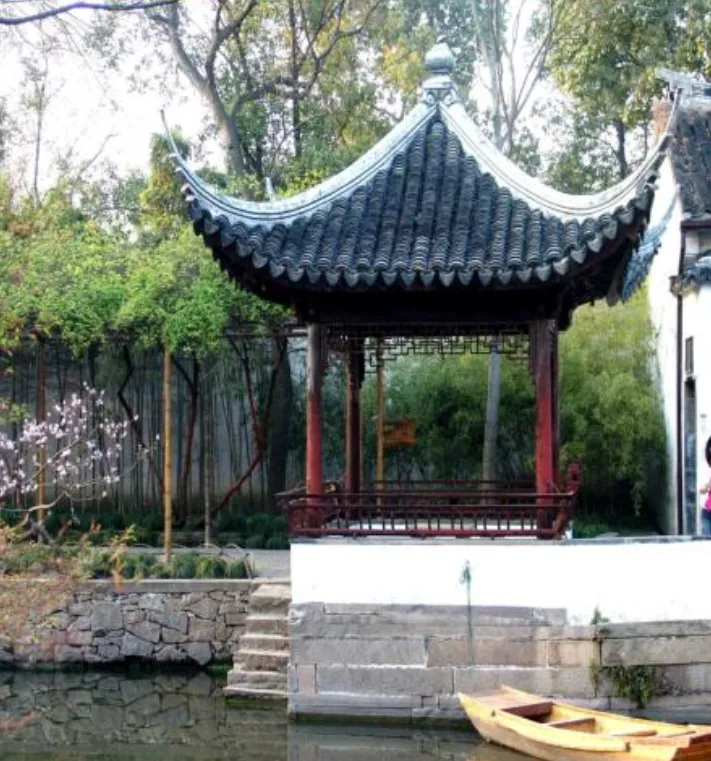
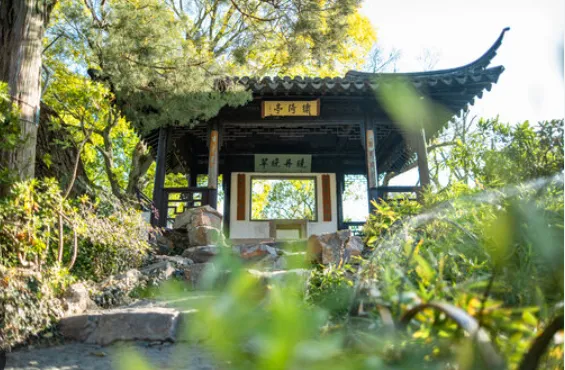
梧竹幽居亭南面的假山上有一座绣绮亭,站在亭内可一览中园内湖光山色的美景,如锦绣一般,故取杜甫诗作中“绮绣相辗转,琳琅愈青荧”命名
On the man made hill to south of the Wuzhu Youju Kiosk stands the Xiuqi Kiosk. Standing inside, one can enjoy a panoramic view of the beautiful scenery of the lake and mountains in the Central Part, which is as beautiful as Chinese brocade. Therefore, it is named after the line "The brocade and embroidery turn together, the beautiful jades get more gleaming" from Du Fu's poem.
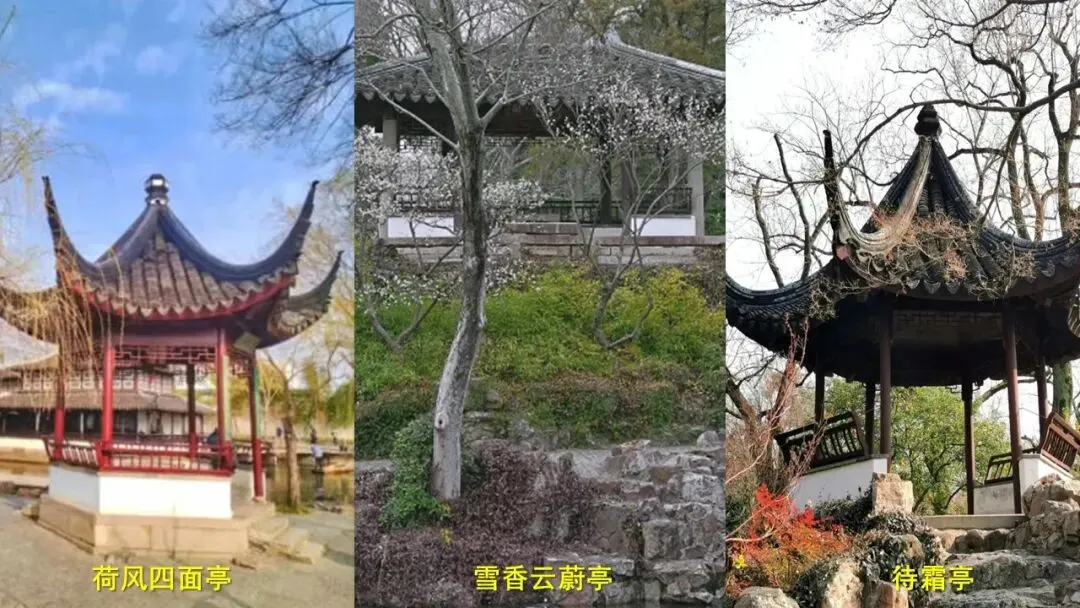
中园内的主屋,也是整个拙政园的正厅,即“远香堂”,取名字周敦颐《爱莲说》中“香远益清”一句。这里是园主会见宾客之地,因造园之初是由中园正门(非今日之东门入口)进入,故此处为会客正厅。建园之初,这里名为若墅堂,乾隆年间重修后更名远香。堂内四处皆为玻璃长窗,端坐室内亦可清晰观赏中园内的景致。远香堂外可看到有荷风四面亭、雪香云蔚亭和待霜亭,相互成对而望,称“对景”。其中荷风四面亭四周还特意种植了五株柳树,致敬东晋名仕陶渊明(号“五柳先生”)
The main building in the central part, and also the main sitting hall of the entire Humble Administrator's Garden, is the "Yuanxiang Hall," literally meaning “spreading fragrance” and named after the phrase "the spreading fragrance of lotus" from Zhou Dunyi's "Ode to my love of Lotus" This was where the garden owner used to treat guests. Because the garden was originally entered through the main gate of its Central Part (not the current East Part), this had been the main reception hall. Originally, it was named "Ruoshu" and renamed as Yuanxiang in QIanlong Era of Qing Dynasty when it was reconstructed and renovated. The hall has long glass windows on all four sides, offering clear views of the central part’s scenery. Outside the Yuanxiang Hall, you can see the Teeming-Fragrant-Lotus-Breeze Kiosk, the Snow Fragrance and Cloud Amassing Kiosk, and the Frost-Awaiting Kiosk, all facing each other, known as "opposite views." the Teeming-Fragrant-Lotus-Breeze Kiosk is partly surrounded by five willow trees, a respect to Tao Yuanming, a famous scholar of the Eastern Jin Dynasty, whose elegant nickname was Mr. Five Willows.
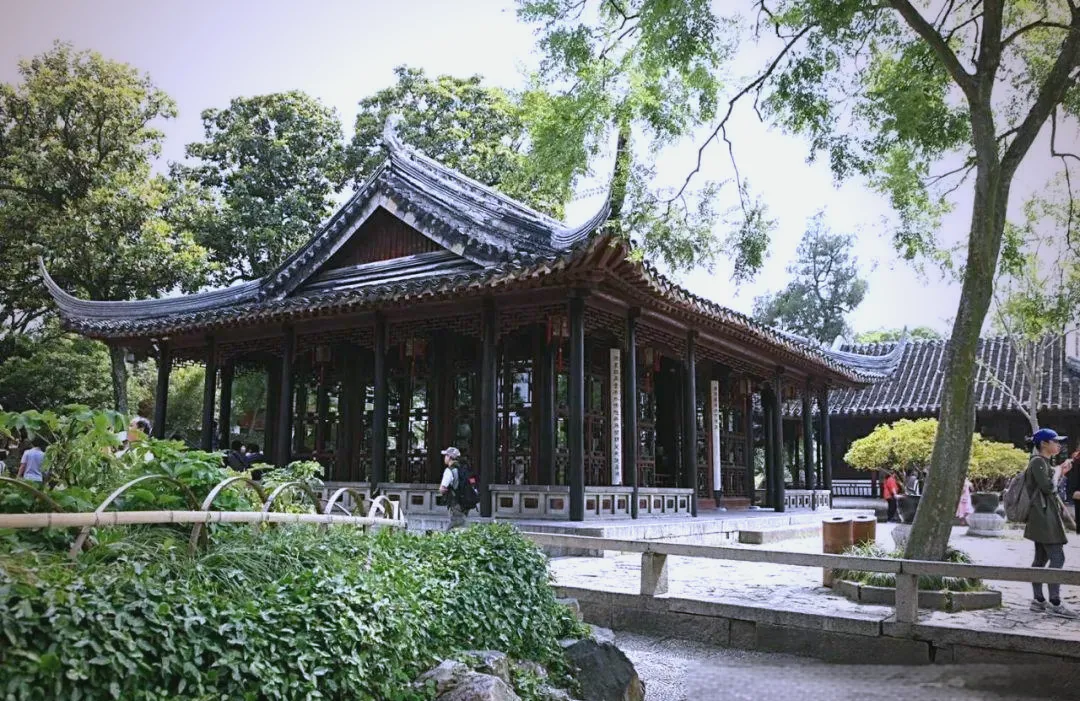
远香堂旁是倚玉轩,因轩内状如貔貅的灵璧石(与太湖石、英石、昆石齐名称中国四大观赏石)而得名。
Next to the Spreading Fragrance Hall is the Jade-Leaning Pavilion, named after a Lingbi stone, a type of dark limestone, one of China's four major ornamental stones, along with Taihu stone, Ying stone, and Kun stone, shaped like Pixiu, a mythical creature that symbolizes fortune-making.
不要忘了走一下倚玉轩门口的“五蝠临门”
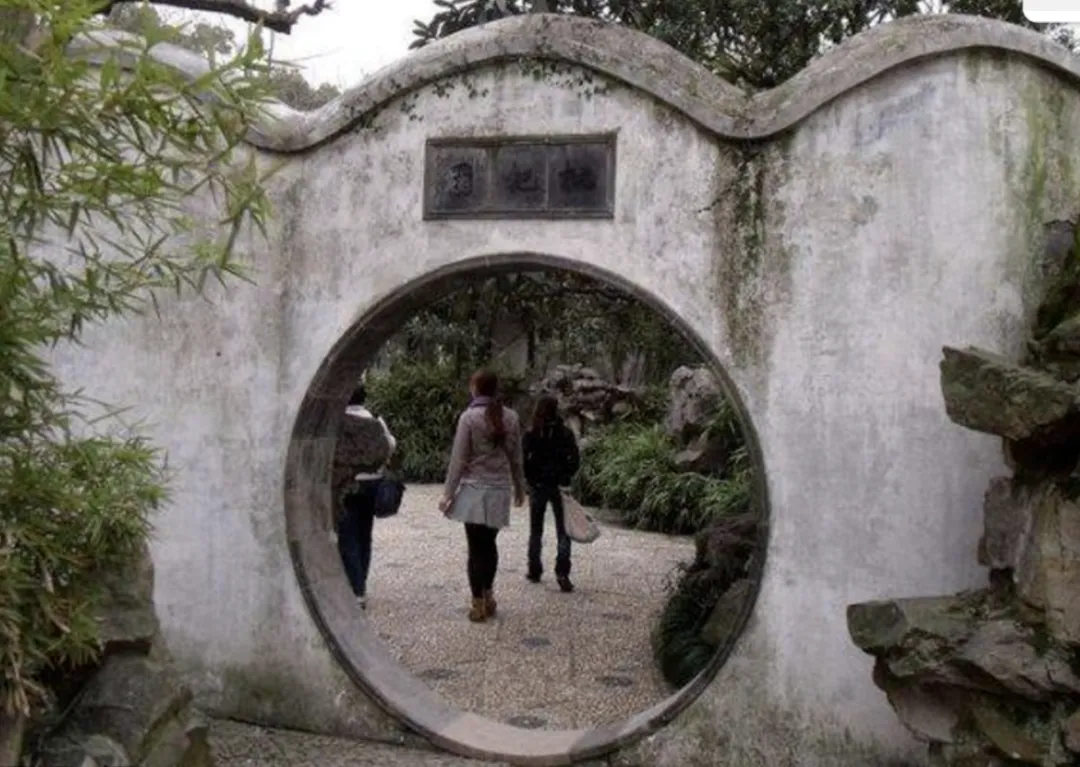
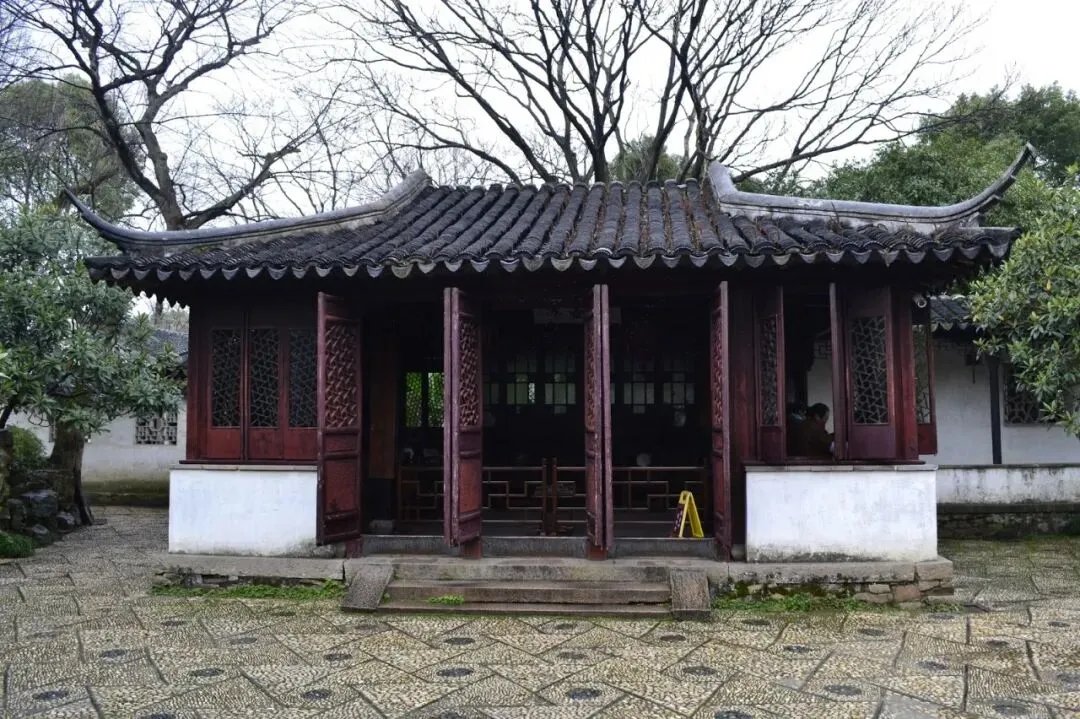
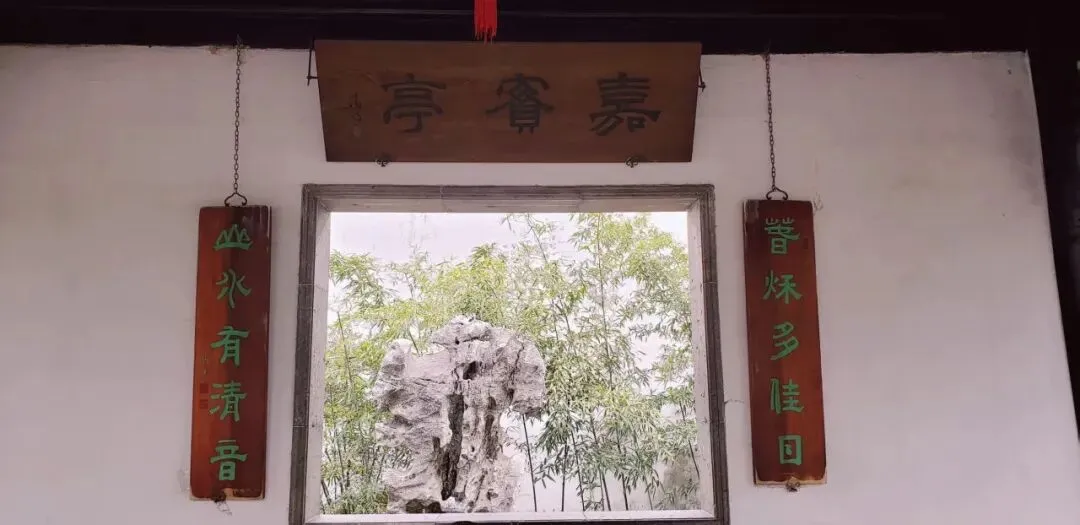
远香堂的东南侧,有一个枇杷园,园内有玲珑馆和嘉实亭。玲珑取自沧浪亭第一代园主大诗人苏舜钦的诗“月光穿竹翠玲珑”。庭院有竹,青翠欲滴;据称此前馆内有一枚玲珑剔透的太湖石,故有玲珑之名。馆内横匾上“玉壶冰”三字则来自鮑照诗句“清如玉壶冰”,指清洁、高尚。园内嘉实亭,嘉实二字表示果实大丰收,结合园名,不言而喻。嘉实亭后开有窗洞,配上对联,是入景拍照的好地方。
To the southeast of Yuanxiang Hall lies a loquat garden, containing the Linglong Pavilion and the Jiashi Pavilion. The name Linglong comes from a poem by the great poet Su Shunqin, the first owner of the Canglang Pavilion, which reads, "Moonlight shines through the bamboo, emerald and exquisite." The courtyard is filled with lush, verdant bamboo; it is said that the pavilion once housed a delicate and translucent Taihu stone, hence the name Linglong. The horizontal plaque inside the pavilion bears the inscription "Jade Pot Ice," derived from the poet Bao Zhao's line, "Clear as jade pot ice," signifying purity and nobility. The Jiashi Pavilion, with its name meaning "abundant harvest," is a fitting addition to the garden's name. On the back wall of the pavilion, there is a window-shaped opening with Chinese couplets on both sides, making it a perfect spot for photographing.
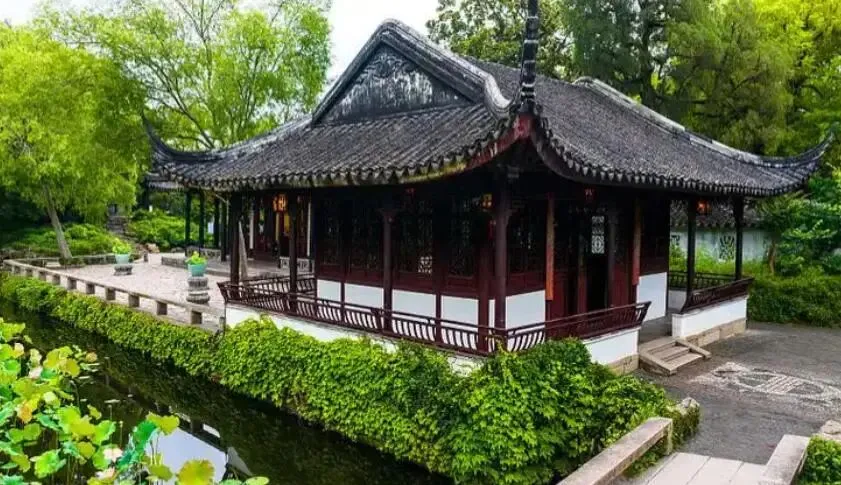
香洲是一座形如舟船的建筑物,可称石舫,建在水边,欣赏园内景观如同乘船,采自李白诗篇“弄扁舟”之意。匾额上的“香洲”二字由拙政园初代总设计师文徵明题词。
Xiang zhou, “Aroma Isle” in English, is a de facto Ancient Chinese Yacht-shaped artful architecture, also known as a stone boat, built on the water's edge. It makes people who enjoy the garden's scenery fall into the illusion of standing on the front deck of a boat, which is an inspiration from Li Bai's poem "Playing in a Small Boat." The two characters "Xiang zhou" on the plaque were inscribed by Wen Zhengming, the first chief designer of the Humble Administrator's Garden.
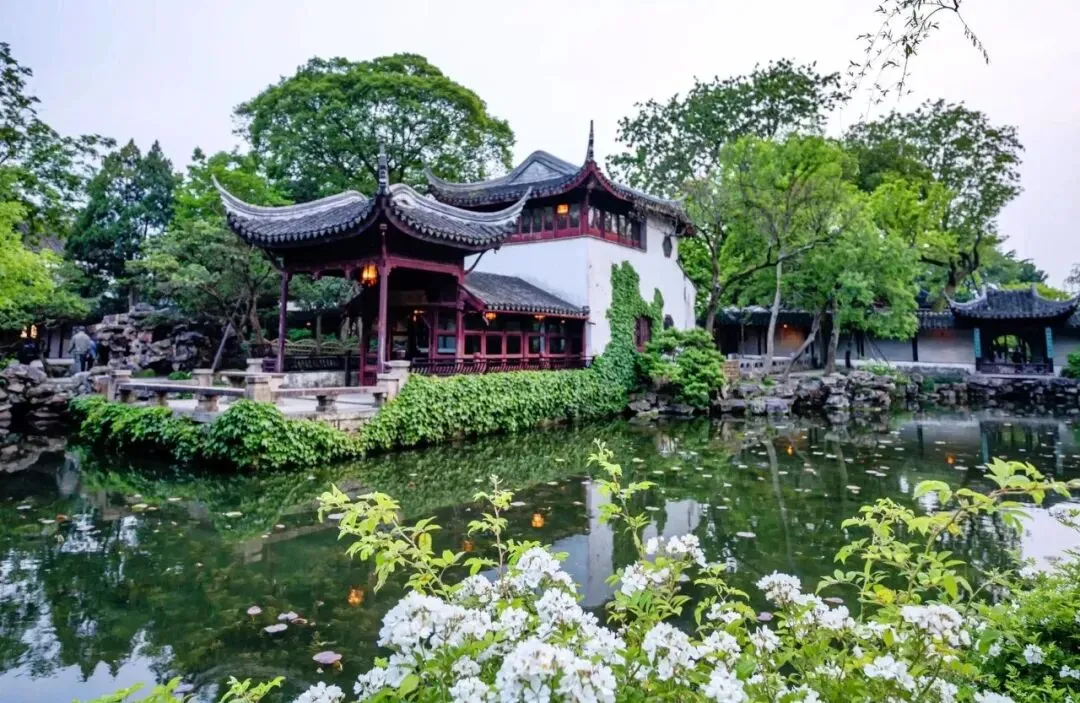
小飞虹,是一座廊桥,虹在古代就是天上之桥的意思,寓意浪漫美好。拙政园出名后很多私家园林及园林化的度假酒店均建有模仿小飞虹的廊桥,来增加园林建筑的情趣和美感。小飞虹将水面一分为二。一侧有小沧浪水院,呼应苏州最年长的园林——沧浪亭之名,从小沧浪透过小飞虹廊桥看中园,别有一番层次感的风景。
Little Flying Rainbow is a covered bridge. In ancient days, "rainbow" meant a bridge in the sky, a metaphor of romance and happiness. After the Humble Administrator's Garden became famous, many private gardens and garden-style resort hotels built covered bridges emulating Little Flying Rainbow to enhance the charm and beauty of their gardens. The water surface is thereby bisected by the Little Flying Rainbow. On one side is the Younger Canglang Water Yard, echoing the name of Canglang Kiosk, Suzhou's oldest garden. Looking from Younger Canglang through the Little Flying Rainbow Covered Bridge towards offers a unique sense of layered scenery.
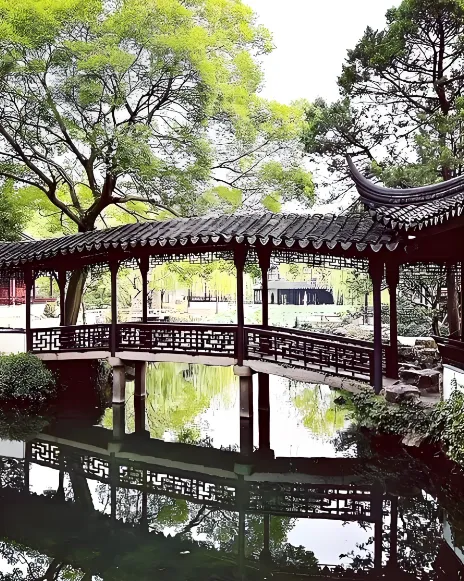
见山楼是一个二层建筑,太平天国起义军攻占苏州后,苏州博物馆原址为忠王李秀成府,相邻的拙政园也被忠王李秀成所占,见山楼就是李秀成的私家办公场所。
Jianshanlou, Mount-spotting Building, is a two-story building. After the Taiping Heavenly Kingdom rebel army captured Suzhou, the site of the Suzhou Museum became the residence of Li Xiucheng, one of the leaders conferred as the Loyal King, and the Humble Administrator's Garden, adjacent to the Museum’s original site, was occupied by Li Xiucheng as well. Jianshanlou served as Li Xiucheng's private office.
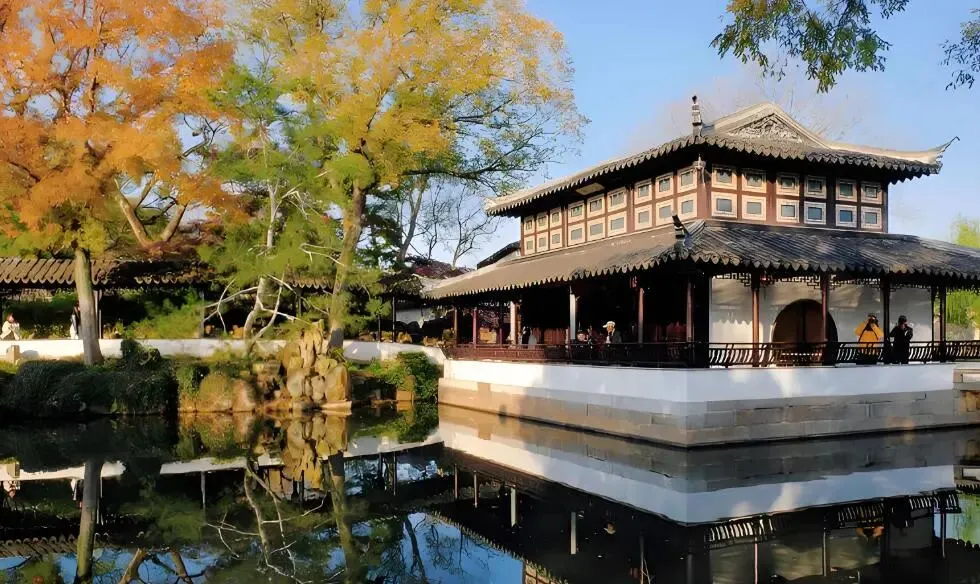
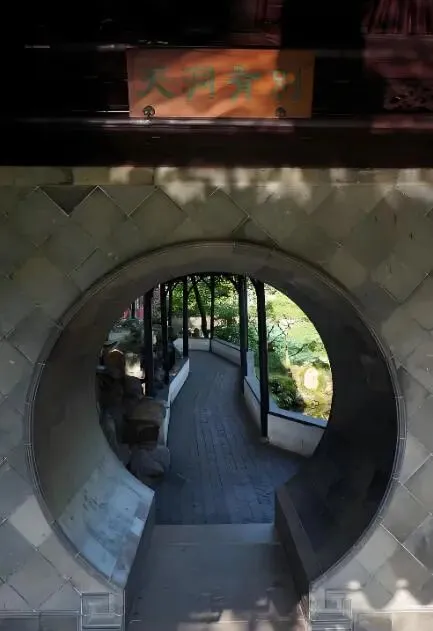
中园和西园的分界线是一条波形长廊,象征水波起伏。底部受巨石头支撑,让其成为苏州园林众多长廊中唯一一条完全架空在水面的长廊。立于廊内可看到与谁同坐轩与后面建筑物的顶部结合成的“折扇”状,称“叠景”。从中园通往西园的其中一条主要路径会穿过两层隔墙合并后开凿的门洞,不管是往门洞的哪个方向走都能看到别样的景致,故名“别有洞天”
The dividing line between the Central Part and the West Part is a lengthy wavy corridor, symbolizing the undulating waves. Supported by stones and rocks, the corridor is the only one among all corridors in private gardens entirely suspended over water. From the corridor, one can see the "folding fan" shape formed by the combination of the Yushuitongzuo Pavilion (Whom to sit with) and the roof of the building behind it, known as "layered scenery". One of the main pathways leading from the Central Part to the West Part passes through a round-shaped opening carved out from the two converged layers of partition walls. No matter which direction you walk through the opening, you'll catch surprisingly different scenery, hence the name Bie You Dong Tian, A Hidden Paradise from Behind the Opening.
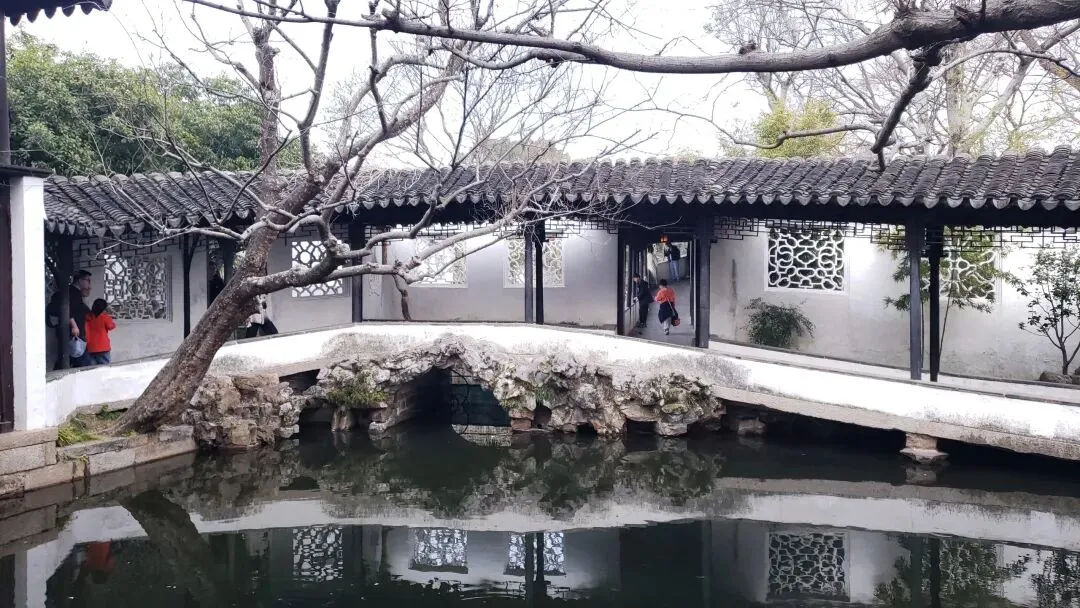
西园(补园)
清末张履谦购得拙政园西部地块后将西园补充建设完善,但不幸的是,他年幼的孙女在水边游玩时溺水而亡令其悲痛异常,所以水中建有石幢刻有经文超度亡灵,不能与石幢合影。
The late Qing Dynasty owner of the West part of Humble Administrator's Garden was Zhang LüQian who expanded and perfected the West Part from an almost ditched place, but tragically, his young granddaughter drowned while playing by the water, which soaked him in deep sorrow. Therefore, a stone pillar inscribed with Buddhism scriptures was erected in the water to pray for the beloved kid’s spirit. Taking photos with the stone pillar is not recommended.
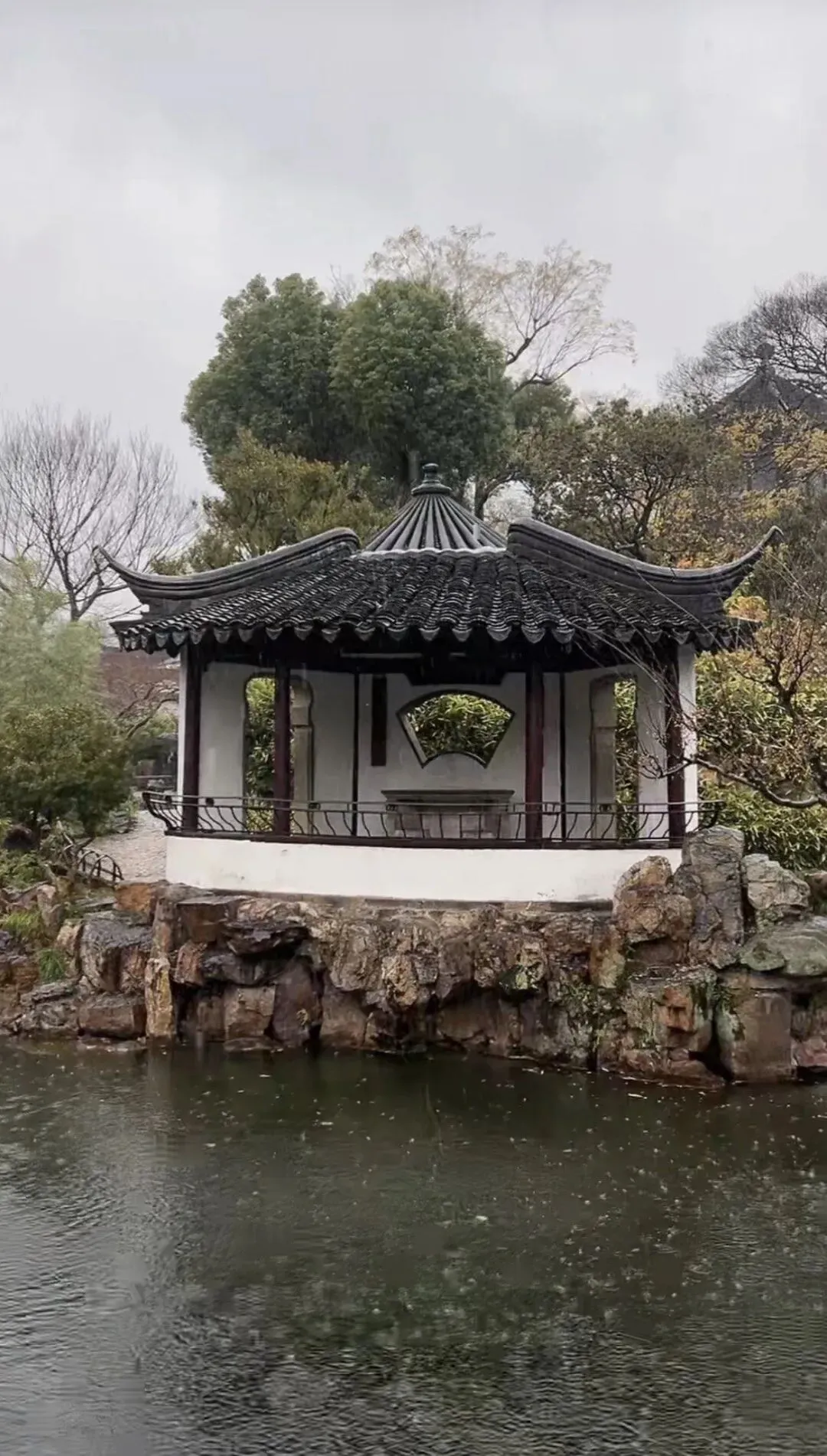
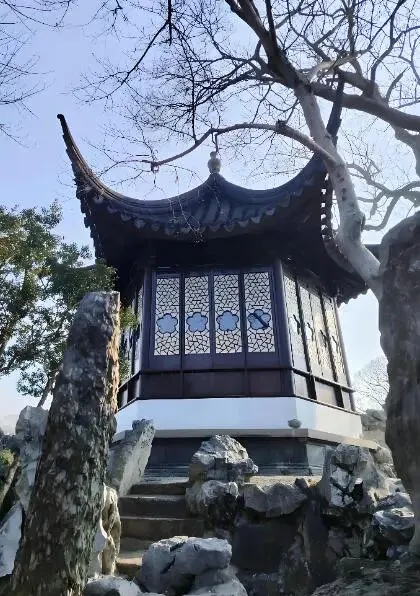
宜两亭位于通往卅六鸳鸯馆的长廊前端的假山,高于分隔中园和西园的云墙(墙顶呈现波浪形内墙,苏州园林特有),是(补园)园主张履谦特意要求建造的杰作,“宜两”最早出自白居易的诗句,表达了“两家相宜”的意思,就是两家共赏景色。既可在中园清晰地看到这个位于西园的亭子,也可在亭中观赏美丽的中园景致。宜两亭的窗户最为与众不同:窗芯镶嵌的并非玻璃,而是一种名为“明瓦”的传统透光材料,由贝壳、蚌壳、云母等打磨成薄片制成。与小沧浪旁的“松风水阁”的窗户是一类的。为了减少观赏中可能造成的损坏,这个亭子每年只在12月份对外开放。
The Yiliang Pavilion, situated atop a rockery near the front end of the long corridor leading to the Thirty-Six-Pair Mandarin Ducks Hall, rises above the “cloud wall”, characterized by its distinctive wavy shape, separating the Central Part and the West Part. It was a masterpiece commissioned by the Supplementary Garden's owner, Zhang Lüqian. The name "Yiliang" originates from a poem by Bai Juyi, expressing the idea of "two households relishing the scenery concertedly." The pavilion, located in the West Part, is clearly visible from the Central Part, and visitors can also admire the beauty of the Central Part from within the pavilion. The most unique feature of the Yiliang Pavilion is its windows: instead of glass, the window frames are inlaid with a traditional translucent material called "Mingwa”, or translucent tiles, as ancient Chinese window glass, made from thinned sheets of shells, clam shells, or mica, similar to those of the Songfeng Water Pavilion next to Xiaocanglang. To minimize possibility of damage during visits, the pavilion is only open to the public in December each year.
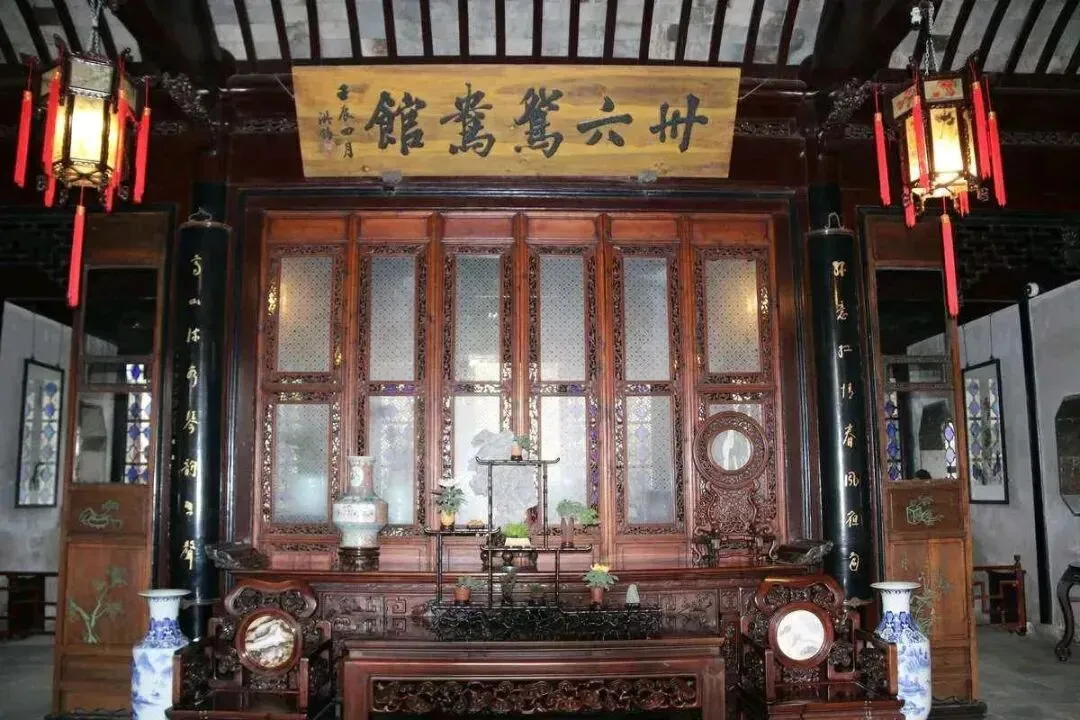
卅六鸳鸯馆取名自张园主当时在馆前的水池中饲养的三十六对鸳鸯,是张园主招待客人的地方。馆名是清朝同治年间苏州著名状元洪钧题词。背靠背的厅外有18株山茶花(又名曼陀罗花),故得名十八曼陀罗馆。馆名由苏州最后一个状元陆润痒(常误作“祥”)题写,他是清末帝(也是中国帝制时期最后一位皇帝)溥仪的老师。每个厅的两侧各有一个佣人所待之地叫作耳房,进口玻璃加上蓝色很漂亮。
The Thirty-Six-Pair Mandarin Ducks Hall is named after the thirty-six pairs of mandarin ducks that the owner raised in the pond in front of the Hall. It was where Mr. Zhang received and entertained his guests. The Hall’s name on the plaque was inscribed by Hong Jun, a famous top scholar from Suzhou during the Tongzhi Era of the Qing Dynasty. There are 18 camellia trees (also known as datura flowers) in front of another hall that is back to back with the main hall, hence the name Eighteen Datura Hall. The name of the Hall was inscribed by Lu Run Yang (often mistakenly written as "Lu Run Xiang"), the last top scholar from Suzhou and the royal tutor of Puyi, last emperor of Qing Dynasty as well as the last emperor of Chinese imperial era. The Ear Rooms, at each corner of the Halls were where servants were ready for tendering service; the imported glass and blue color are very beautiful.
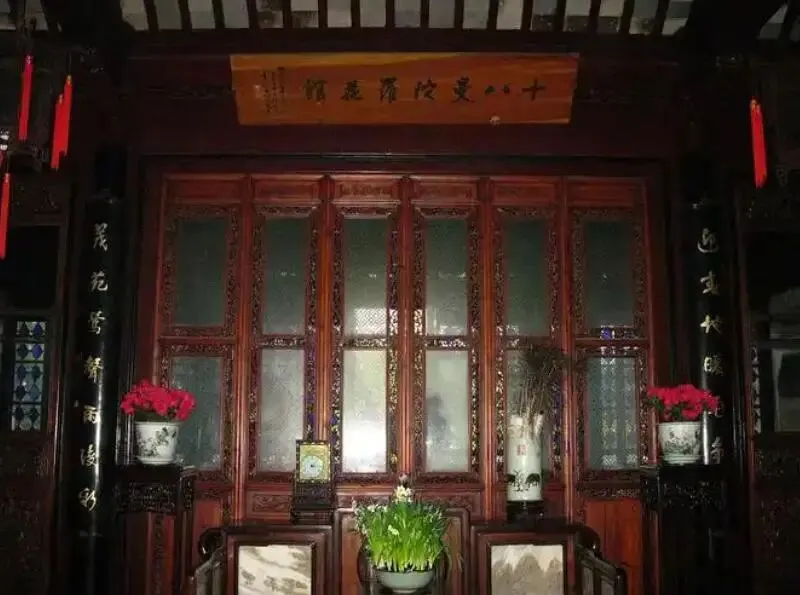
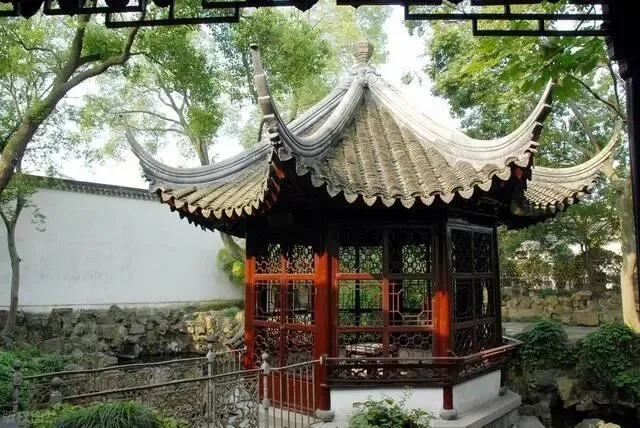
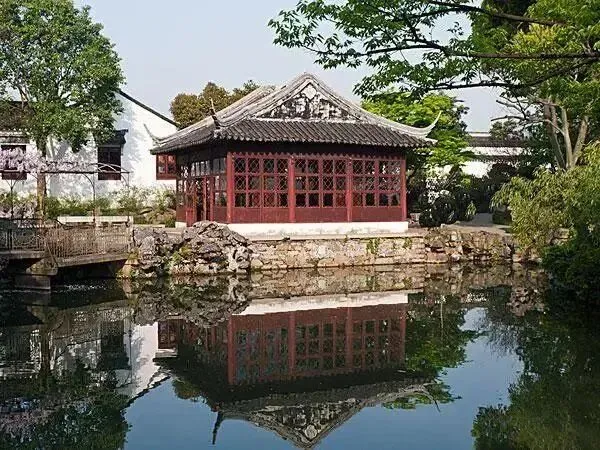
出十八曼陀罗馆西门往南走将看到拙政园最西南角的一个建筑——塔影亭,顾名思义,这里曾经能见到北寺塔雄壮的身姿,可惜因为如今院墙高筑,挡住了好风景。从塔影亭往北数十米即见到拙政园最西的一个景点——留听阁,来自李商隐诗句“留得枯荷听雨声”,因为留听阁边的池塘中种植了大量荷花,也是园主张履谦最喜欢的花卉。这是他夏日里欣赏荷花,聆听昆曲的地方。
Walking southward from the west gate of the Eighteen Datura Hall, a building in the southwest corner of the Humble Administrator's Garden - the Pagoda Shadow Kiosk. The imposing silhouette of Bao’en Temple Pagoda was once clearly seen from here in old days, but unfortunately, the high walls now block the good view. Dozens of meters along the trail to the north of the Kiosk, the westernmost scenic spot in the entire Humble Administrator's Garden, Liuting Pavilion, is about to show up. Its name stems from a line in Li Shangyin's poem, "Keeping shriveled lotus leaves to listen to the rhythm of raindrops on them," because the pond next to Liuting Pavilion is planted with a colossal number of lotus flowers, which were also Zhang Lüqian’s favorite. This was where he enjoyed the lotus flowers and listened to Kunqu Opera in the summer.
留听阁北侧有个假山群称为“笠亭山”,山顶矗立着一座八角形双层建筑,高大气派,引人注目。假山上绿荫盎然,使这个建筑物似浮于一片翠绿之上,故名“浮翠閣”。
To the north of Liuting Pavilion, there is a collection of rockery called "Liting Hill". At the top of the hill stands an octagonal two-story building, which is tall, imposing and eye-catching. The man-made hill is covered with lush greenery, making the building seem to float on a green landscape, hence the name "Pavilion Floating on Greenery".
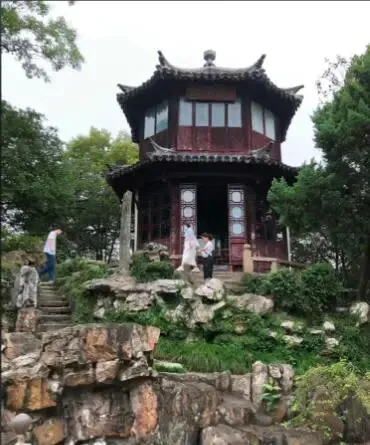
站在笠亭山向东望去,一眼就能看到补园北部重要的景点——倒影楼,这是补园内最高大的建筑物(分两层)。张园主建造补园后,除了欣赏倒影楼前池塘中映照的补园内多个景点的美景,也在这里摆放了沈周和文徵明两位著名画家的画像和纪念品,以资纪念和致敬。
Standing atop the Liting Hill and looking eastward, you'll easily see the Reflection Mansion, a key attraction in the northern part of Supplementary Garden. It's the tallest building in the garden (two stories high). After rebuilding the West Part as the Supplementary Garden, Mr. Zhang, the owner, not only wanted to enjoy the beautiful scenery of various attractions reflected in the pond in front of the Reflection Mansion, but also placed portraits and souvenirs of the two famous painting masters, Shen Zhou and his student Wen Zhengming, here as a way to commemorate and pay tribute to them.
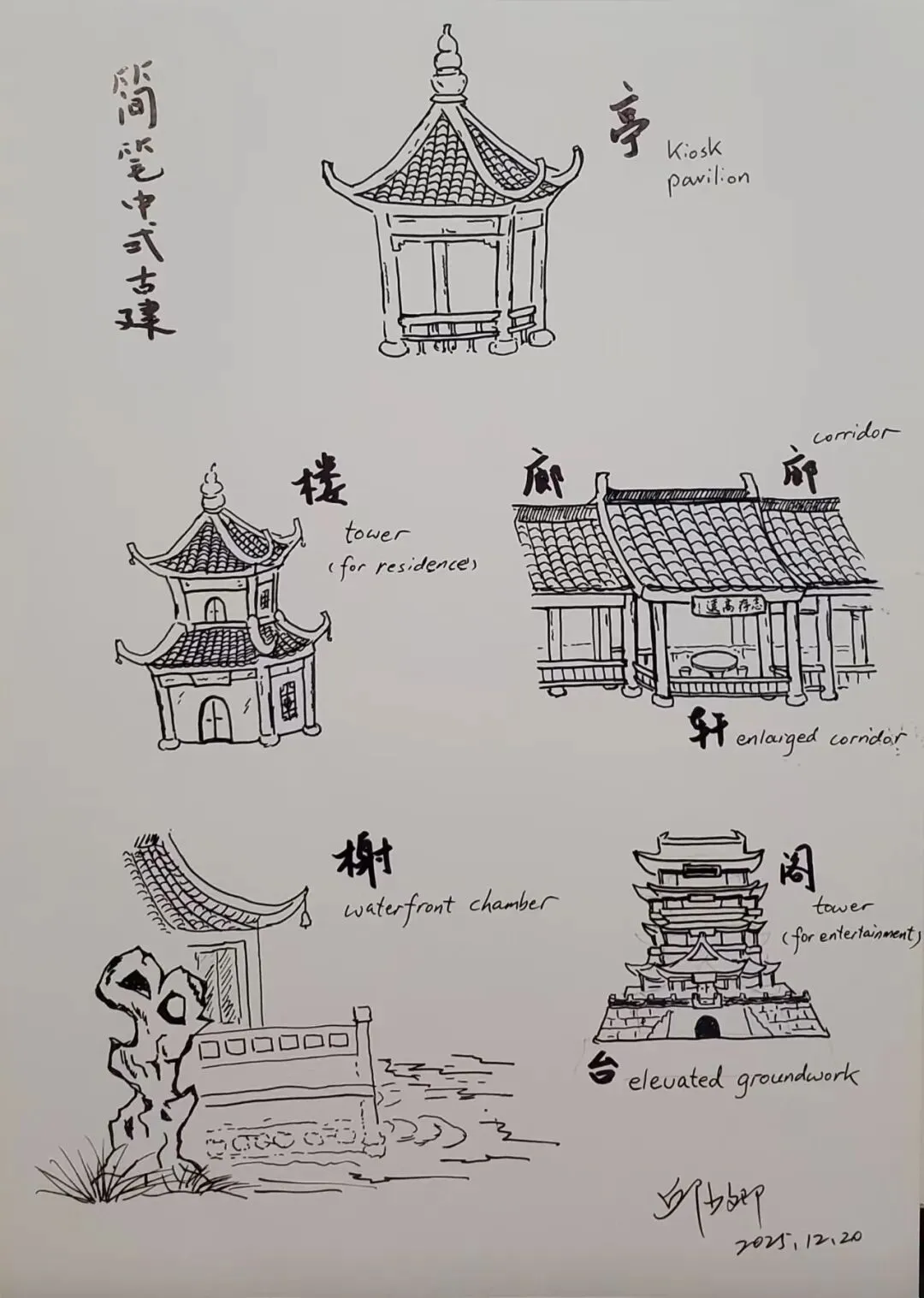
附赠笔者手绘“亭台楼阁轩榭廊”等古建的区别和联系图
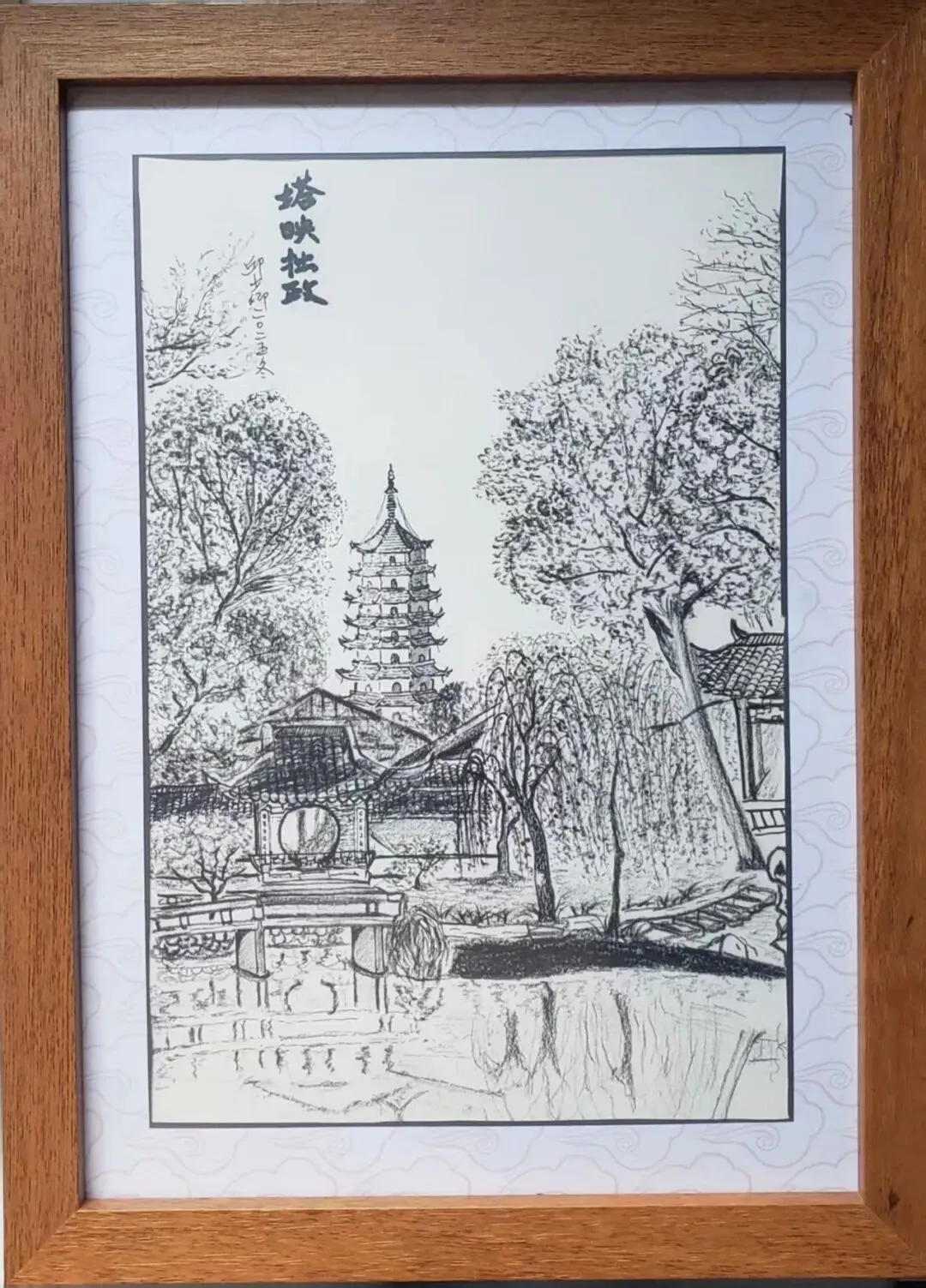
最后再配一幅手绘的铅笔画“塔映拙政”以飨读者(该作品于2025年末赠予新加坡友人)



相关文章
- 山东淄博旅游必去十大景点游玩攻略,别只知道淄博烧烤!2026年5月十大接地气景点与五大神仙美食,这篇全攻略让你不踩坑!推荐收藏游玩
- 假期旅游出行消防安全指南
- 暑期来临!!!玩水旅游攻略推荐
- 德宏州盈江县旅游攻略和避坑指南
- 【世界杯·加拿大全攻略】2026枫叶之国的世界杯!2城旅游指南+B组深度解析+各队备战全追踪
- 限时领 | 新版《尼尔斯骑鹅旅行记》双语PDF+音频+中文动画+领读音频课,豆瓣9.0分 风靡全球112年!绝对收藏!
- 崂山旅游攻略:
- 旅游攻略 | 玩转青海西宁:不止青海湖!从东关清真寺到碳水天堂,遇见高原古城的灵魂
- 五一汴京出游指南
- 桂林旅游学院2026年普通高等教育专升本报考指南
发表评论
评论列表
- 这篇文章还没有收到评论,赶紧来抢沙发吧~