
赴巴中国游客亟需更好的旅游配套设施与服务

Chinese Travellers in Pakistan Need Better Tourism Facilities and Services
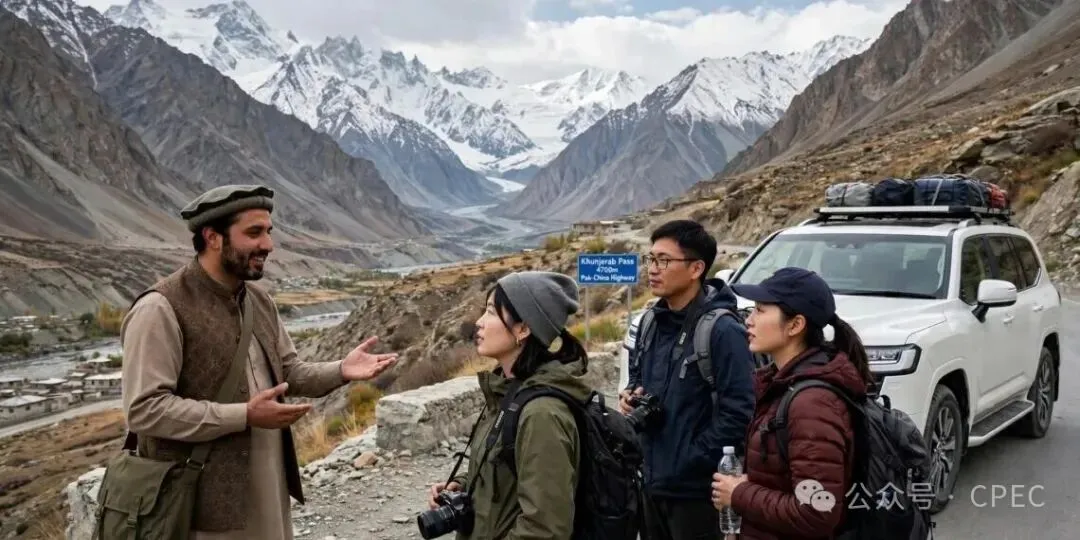
For Chinese tourists in Pakistan, the journey can begin long before a mountain road comes into view. Visa arrangements, security clearances, transport, accommodation, language support and reliable local operators can determine how easily a trip moves from an ambitious itinerary to an enjoyable holiday. As Pakistan seeks to attract more Chinese visitors, improving these services is becoming increasingly important.
In September 2026, officials discussed a proposal to restore special visa-on-arrival arrangements for Chinese tourists travelling into Gilgit-Baltistan through the Khunjerab Pass. The proposed first phase would cover Hunza and Nagar, with possible expansion to the rest of Gilgit-Baltistan if the pilot proves successful. However, the proposal remains subject to the required government approvals and security clearance, according to Dawn.
The proposal matters not simply because of the potential number of visitors it could attract, but also because it raises a broader question: is Pakistan’s tourism industry adequately prepared to meet the particular needs of Chinese travellers?
Beyond Scenery: Building a Usable Tourism Experience
Pakistan has no shortage of destinations that can be marketed to international visitors. The country’s official tourism platform highlights trekking, mountaineering, rafting, mountain and desert safaris, fishing, birdwatching, and diverse mountain, desert and coastal landscapes. Gilgit-Baltistan, in particular, is promoted for its high peaks and expedition routes.
However, an attractive destination and an accessible destination are not the same thing.
Pakistan’s tourism authorities have previously identified several services needed to make travel more accessible for Chinese tourists in Pakistan. During discussions on bilateral tourism, the Pakistan Tourism Development Corporation (PTDC) highlighted the importance of licensed tour operators, group tours and Chinese-language guides. It also recommended specialised training for guides and greater tourist access through Khunjerab.
Although these measures may appear administrative, they directly influence the visitor experience.
A traveller who cannot communicate easily with a hotel, driver or guide faces different challenges from someone supported by an operator familiar with Chinese visitors. Similarly, easier border procedures can deliver meaningful benefits only when transport, accommodation, security and local services are prepared to handle the resulting demand.
Khunjerab Opens New Opportunities for Chinese Tourists in Pakistan
The Khunjerab route gives Pakistan a distinctive tourism advantage by connecting the country to China’s Xinjiang region through a land border.
The crossing has already become part of a broader tourism and connectivity story. Khunjerab moved to year-round operations in December 2024, and The Daily CPEC previously reported increased cross-border traffic and tourism activity following the change.
The current proposal concerning Chinese tourists entering Gilgit-Baltistan would build on this geographical connection.
Under the proposal discussed at the Special Investment Facilitation Council, Chinese tourists entering through Sost could initially travel onward to Hunza and Nagar. Officials also discussed simplifying the existing multi-step no-objection certificate (NOC) process through a possible one-window system, according to Dawn.
For tourism businesses, the distinction between a border crossing being technically available and being convenient for holiday travel is important.
A successful tourism route requires predictable procedures, clear information and coordinated services. These include operators capable of arranging transport, accommodation and itineraries; guides who can communicate effectively; and local authorities able to facilitate visitors without creating unnecessary uncertainty.
Understanding What Chinese Tourists in Pakistan Need
Pakistan’s tourism promotion in China has traditionally focused on landscapes, adventure and cultural heritage. In 2023, PTDC and Pakistani tour operators participated in the China Outbound Travel & Tourism Market in Beijing, where Pakistan sought to establish business-to-business connections with Chinese tourism companies. PTDC described China as an important potential source of inbound visitors and emphasised cooperation between operators in both countries.
The attraction is understandable.
For Chinese visitors, northern Pakistan offers landscapes that differ considerably from many familiar domestic tourism destinations. The Karakoram, high-altitude valleys and routes around Hunza provide opportunities for mountain tourism, photography and outdoor travel. Pakistan also offers archaeological and cultural attractions, including Gandharan heritage and historic urban centres.
However, the existence of attractive destinations does not automatically translate into tourism demand.
Travellers have different budgets, expectations, mobility requirements and reasons for visiting. Mountaineering enthusiasts, family groups, photographers and visitors interested in cultural heritage may all require different itineraries and services.
Understanding these differences makes market research and specialised tour planning just as important as destination marketing. Pakistani operators seeking to attract Chinese tourists should develop travel packages around clearly identified interests rather than relying on a single promotional approach.
Language Support and Local Cultural Experiences
Language support is one of the clearest requirements identified in Pakistan’s tourism planning. PTDC has specifically highlighted the need for Chinese-language tour guides and proposed training arrangements with Chinese counterparts.
The need extends well beyond tour guides.
Restaurants, hotels, transport companies and local attractions all contribute to a visitor’s experience. Basic Chinese-language information, clear digital communication, reliable emergency contacts and culturally informed hospitality can reduce difficulties during a trip. Familiar payment options, where available, may also make everyday transactions easier.
At the same time, local encounters are an essential part of meaningful international tourism.
A Chinese visitor travelling through Hunza does not experience the landscape in isolation. The journey also involves drivers, hotel workers, shopkeepers, guides, restaurant staff and local residents. These interactions can shape how visitors understand Pakistan long after they return home.
This places responsibility on the local tourism industry as well. Cultural exchange works best when it is built on genuine hospitality, mutual respect and meaningful engagement rather than treating international visitors solely as sources of revenue.
From Visa Facilitation to Tourism Capacity
Pakistan has been moving towards greater digitalisation and facilitation of visa applications for Chinese nationals. In 2024, the government introduced online visa applications for Chinese citizens, presenting the measure as a way to facilitate business and tourism travel, as previously reported by The Daily CPEC.
The proposed Gilgit-Baltistan arrangement is more specific because it addresses the circumstances of Chinese tourists travelling by land through Khunjerab.
However, visa facilitation should be understood as one part of the wider tourism system.
If border procedures become easier while roads, accommodation, information services and professional guiding remain inconsistent, the benefits may be limited. Conversely, improvements in these areas can make travel more convenient for visitors from multiple international markets, not just China.
This is why the current discussion matters beyond a single visa category. It highlights the need to connect travel facilitation with the practical capacity of Pakistan’s tourism industry.
Building a Tourism Market for Chinese Travellers
Pakistan’s tourism authorities have spent years promoting the country in China. The challenge now is to convert promotional interest into a dependable visitor experience.
Achieving this requires a better understanding of what different Chinese travellers seek, itineraries designed around their interests, stronger Chinese-language capacity and closer cooperation between Chinese travel companies and Pakistani operators.
The current Khunjerab proposal offers a practical opportunity to test this approach in one of Pakistan’s most distinctive tourism regions. However, because the proposal remains under consideration, its eventual impact cannot yet be measured.
The more useful question, therefore, is not simply how quickly Pakistan can increase the number of Chinese tourists. It is whether the country can build a tourism system in which visitors can travel with reasonable predictability, communicate easily, experience local communities and return home with a fuller understanding of Pakistan.
For Chinese tourists in Pakistan, the mountains may be the reason to visit. The quality of the journey will determine much of what they remember.



相关文章
发表评论
评论列表
- 这篇文章还没有收到评论,赶紧来抢沙发吧~