
【论文分享】中国乡村旅游目的地空间分布格局及其影响因素

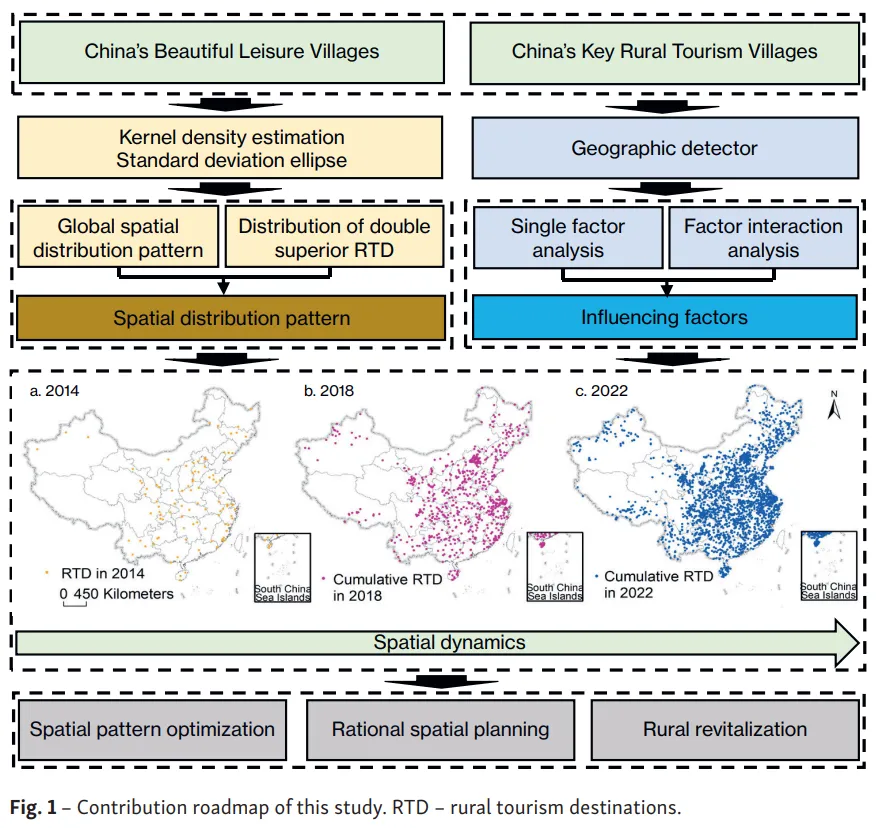
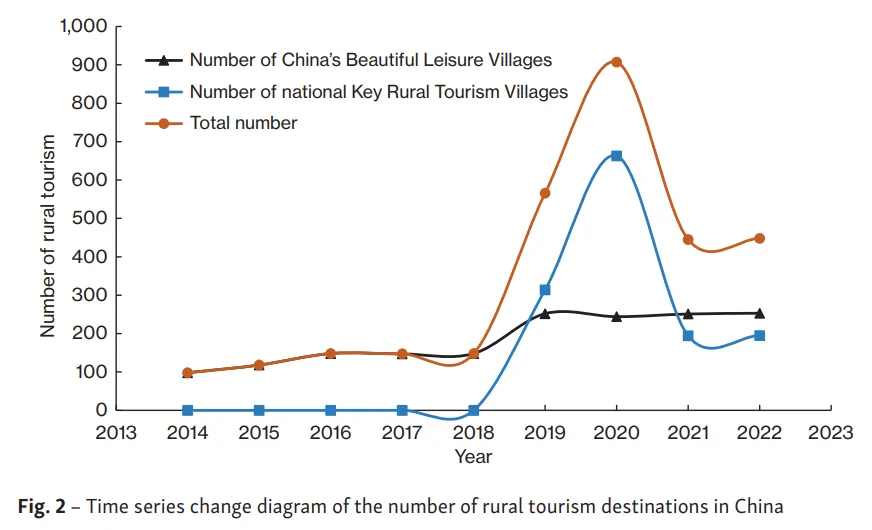
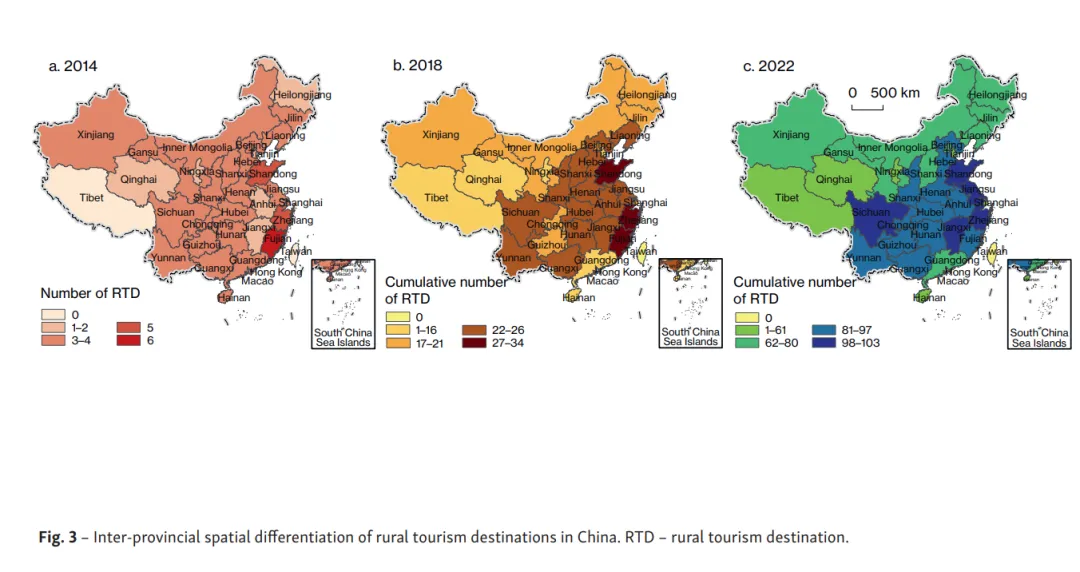
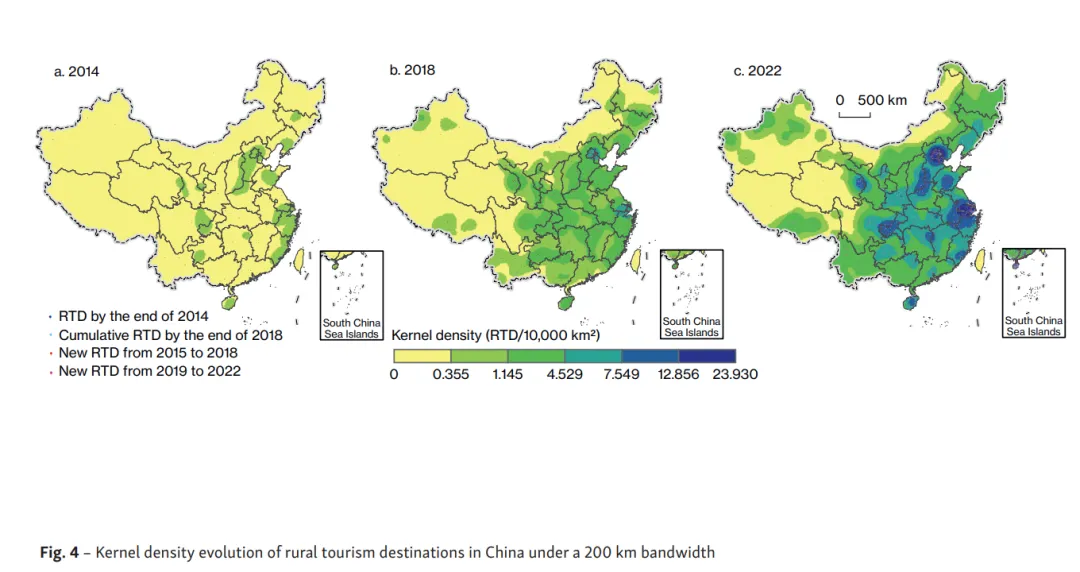
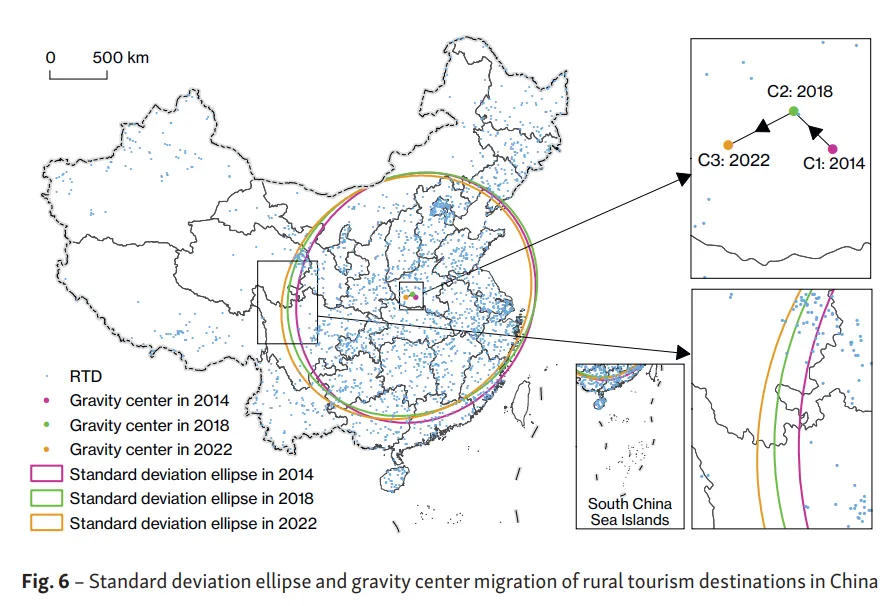
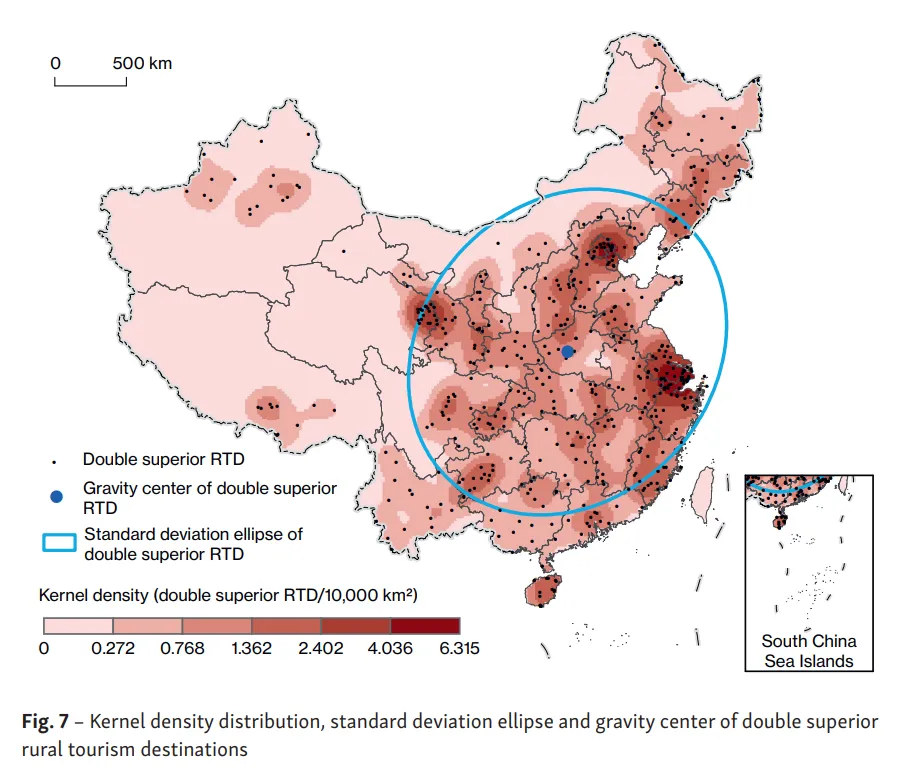
Based on methods of kernel density estimation, standard deviation ellipse and Geographic Detector, we explored the spatial distribution pattern and influencing factors of China’s 2495 rural tourism destinations. Results showed that China’s rural tourism destinations increased rapidly from 2014 to 2022, but inter-provincial differences expanded, with South China region and the southern part of North China region gradually becoming areas with relatively abundant rural tourism resources. Central area of Beijing-Tianjin-Hebei district and central area of Yangtze River Delta always had the densest rural tourism destinations, making the spatial pattern showing a circle structure around the core node. Concentration trend of rural tourism destinations along the northeast-southwest axis was gradually obvious, and the gravity center showed a slow westward trend. Double superior rural tourism destinations were also mainly distributed in South China and North China regions, showing a trend of three pillars with more northerly gravity center. Spatial pattern of China’s rural tourism destinations was affected by multiple factors, and the driving structure has transitioned from single-factor weak explanatory power to multi-factor strong synergistic effect.
基于核密度估计、标准差椭圆和地理检测器等方法,本文探讨了中国2495个乡村旅游目的地的空间分布格局及其影响因素。结果表明,2014年至2022年间,中国乡村旅游目的地数量快速增长,但省际差异日益扩大,华南地区和华北南部逐渐成为乡村旅游资源相对丰富的区域。京津冀中心区和长三角中心区始终是乡村旅游目的地密度最高的地区,呈现出以核心节点为中心的环状空间格局。乡村旅游目的地沿东北-西南轴线的集中趋势逐渐显现,重心呈现缓慢西移的趋势。双优乡村旅游目的地也主要分布在华南和华北地区,呈现出重心偏北的三支柱格局。中国乡村旅游目的地的空间格局受到多种因素的影响,其驱动结构已从单一因素解释力弱转变为多因素协同效应强。
文章插图:
往期回顾

(点击蓝字可转跳阅读)

有缘待续
下
期
再
会



相关文章
发表评论
评论列表
- 这篇文章还没有收到评论,赶紧来抢沙发吧~